Spokane, WA
Burst and Frozen Pipe Cleanup in Spokane
A plumber fixes the pipe. A restoration crew handles everything the pipe soaked. Know which call comes first.
Have your ZIP code ready. A local restoration pro answers.
Updated November 12, 2026
Most burst pipes do not announce themselves with a bang. They announce themselves a day later, with a stain on the ceiling, a puddle by the water heater or a sound like a faucet running somewhere you did not turn one on.
Water still spreading? Talk to a local restoration pro now.Have your ZIP code ready. A local restoration pro answers.
Call (509) 555-0134How it usually plays out
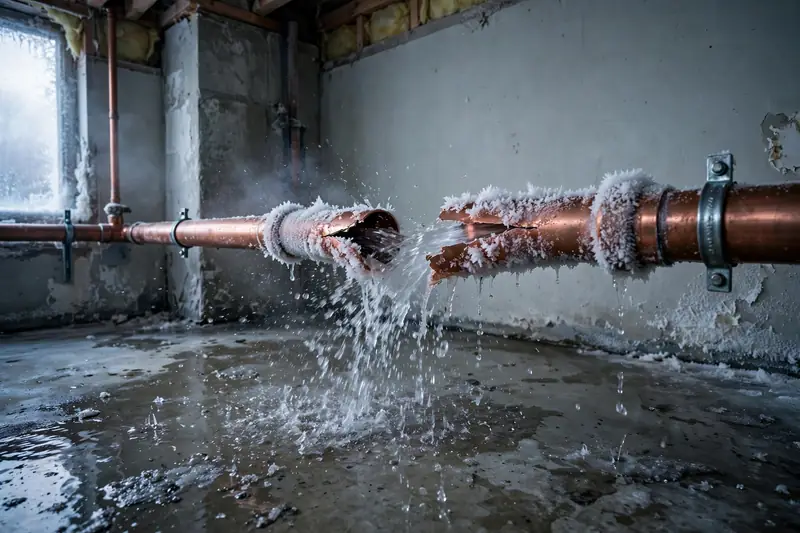
Water freezes, expands, and pushes against the inside of the pipe until the weakest spot gives. That spot is often not where the ice is. The split opens in a section that had water pressure behind it, so the damage can show up a few feet from the frozen stretch.
Then the line thaws. Water that was held in place by ice starts to move. In an empty house, or one where everyone left for the day, a half-inch supply line can put out gallons a minute.
The result inside a Spokane home often looks like this: soaked insulation in the crawlspace, a wet subfloor under the kitchen, a bulging ceiling below an upstairs bathroom, or a basement with an inch or two across the slab.
Where pipes tend to fail in this area
The pattern is consistent from one cold snap to the next.
- Unheated crawlspaces. Many Valley ranches and older Spokane homes run supply lines through crawlspaces with thin or missing insulation. Wind finds the vents.
- Exterior kitchen and bathroom walls. A sink on an outside wall with no insulation behind the pipes is a repeat offender.
- Garages and mudrooms. Washing machine lines and utility sinks in unheated spaces freeze fast.
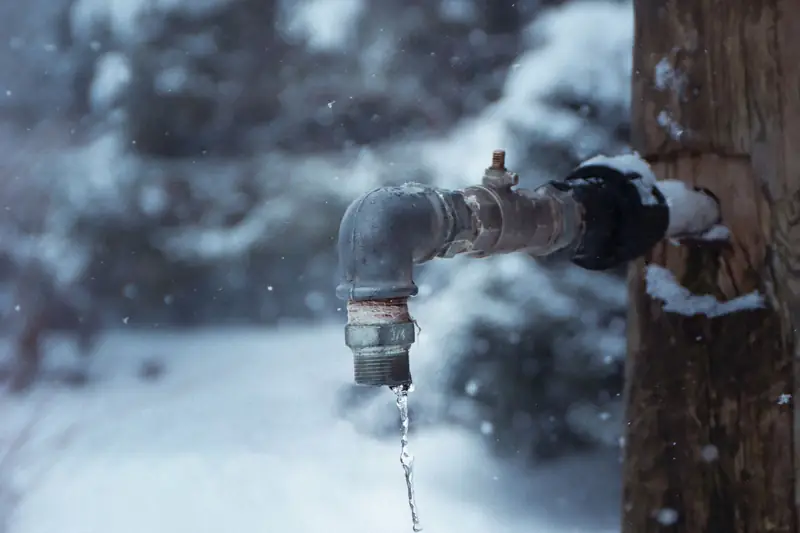
- Hose bibs. A garden hose left attached through winter traps water inside the faucet and the pipe behind it. The split is inside the wall, and you don't see it until spring.
- Vacant and second homes. Cabins and rentals, including those around Newman Lake and Nine Mile Falls, can sit with no heat for days.
- Attic lines. Ceiling plumbing and fire-sprinkler runs can freeze and then drip into finished rooms below.
Spokane's cold snaps are a different thing from a cold month. A brief plunge into the teens with wind is often worse for pipes than a steady 25 degrees, because the house cools faster than the owner expects. The winterizing guide for Spokane homes covers what to do before the next one.
Not sure how bad it is? A short call usually tells you.Have your ZIP code ready. A local restoration pro answers.
Call (509) 555-0134Cleanup, in the order it happens
- Water off. The crew confirms the main is closed and the line is isolated. Valves on older houses sometimes won't turn all the way, in which case a plumber may have to cut the line.
- Power check. Outlets and lights near the leak get checked. Sometimes a circuit gets shut off.
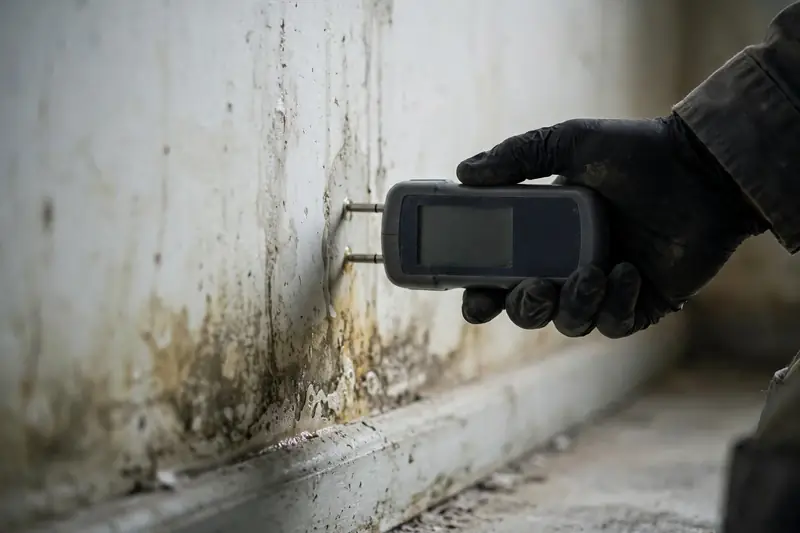
- Find the wet. Moisture meters and thermal cameras trace the water path through ceilings, walls and floors.
- Pull and pump. Standing water goes first. Soaked insulation, ceiling drywall and padding come out.
- Open the cavities. Wall bays that held water get cut open, usually in horizontal lines, so air can reach the framing.
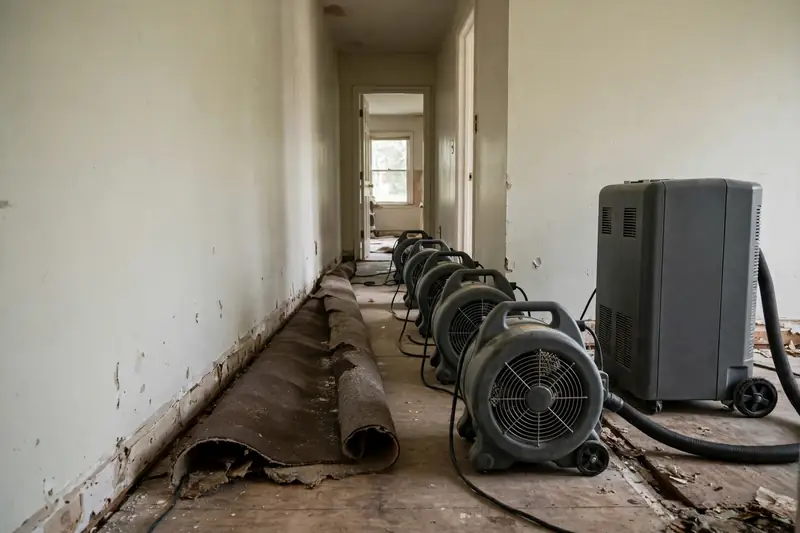
- Dry. Air movers and dehumidifiers run for several days, with daily readings.
- Treat and verify. Surfaces are cleaned, and the final readings are compared to dry areas of the house.
- Plumber and rebuild. Once the structure is dry, drywall, insulation and flooring are replaced.
The plumber's repair often happens in the first few hours so that water can be turned back on. If the pipe is behind a wall, the access hole the plumber cuts is also the first step in the drying.
What drives the cost of a burst pipe job
The pipe repair and the water cleanup are separate bills, which surprises people. A plumber fixes the pipe, and a restoration crew handles the water. Costs vary with the factors below, and each company's inspection gives you its own figure.
| What affects the cost | Why it matters |
|---|---|
| How long the pipe ran | A line shut off in minutes soaks far less than one that ran overnight in an empty house. |
| Where the pipe failed | A break inside a wall needs an opening cut and patched. An exposed pipe is simpler to reach. |
| What the water reached | Ceilings, insulation, carpet, hardwood and the crawlspace below each add to the scope. |
| Drying only or rebuild too | Drying stops the damage. New drywall, flooring and paint come after and are scoped separately. |
| Prevention work | Insulation, heat tape or re-piping a wall section is optional but easiest while the wall is open. |
| Drying time, typical clean-water job | 3 to 5 days. |
A repair that runs inside a wall takes more work than an exposed one because someone has to open and then patch the wall. See the burst pipe repair cost guide for what moves the plumber's side of the bill.
Is it an emergency? What to do in the next ten minutes
It is an emergency if water is moving, if it has reached electrical items, or if a ceiling is bulging.
- Close the main shutoff. In many homes the valve is at the front wall of the basement or crawlspace, or inside a utility closet.
- Open the lowest faucet in the house and one upstairs to drain the lines.
- Turn off the water heater (breaker for electric, gas control to pilot or off) so it does not run dry and overheat.
- Poke a small hole in a bulging ceiling over a bucket if it is clearly full of water. That releases it in one place instead of letting the whole panel fall.
- Move valuables and electronics.
- Photograph the damage, the broken section if visible, and any frost around it.
- Call a plumber and a restoration crew.
If you are not sure the pipe is the cause, the what to do when pipes freeze post walks through how to tell a frozen line from a leaking one.
Water still spreading? Talk to a local restoration pro now.Have your ZIP code ready. A local restoration pro answers.
Call (509) 555-0134Preventing a repeat
Once the cleanup is done, use the open walls. A crew that has cut into a cold exterior wall has exposed the exact pipes that failed, and that is the cheapest moment to add insulation or reroute a run toward the warm side of the house. Plumbers can also swap old supply lines and add a shutoff valve to a trouble spot so the next failure can be isolated in seconds. In a crawlspace, sealing vents for winter and fixing gaps in the rim joist cuts the wind that did the damage. If you travel in winter, leave the heat at a steady setting and ask someone to look in on the house.
Insurance and burst pipes
A pipe that bursts suddenly is the classic covered loss under many homeowners policies. The pipe itself, meaning the cost to repair or replace the failed section, is often excluded or limited, while the resulting water damage may be covered. Policies differ, and some deny claims when the home was left unheated or unoccupied for a set period. Check yours before a cold snap, not after.
Call your insurer promptly. Keep the failed section of pipe if you can, because an adjuster may want to see it. Save receipts for emergency repairs and any hotel stays.
Neighborhoods and towns with the most calls
Older housing around Hillyard and Logan means galvanized supply lines and uneven insulation. North of the city, Deer Park and Mead see more exposure to wind and deeper cold, and homes there often have wells that add pump-house lines to freeze. For any of these, the broader drying work is described under water damage restoration.
Sources and official resources
Service area
Burst Pipes help across the Spokane area
Choose your town or neighborhood for local details, ZIP codes and permit offices.
Spokane neighborhoods
Spokane County, WA
North Idaho
Homeowner guides
Guides about burst pipes
FAQ
Common questions
Straight answers to what Spokane homeowners ask most. Still unsure? Call and ask a local pro.
Call (509) 555-0134Who do I call first, a plumber or a restoration company?
Shut the water off at the main, then call both. A plumber repairs the failed pipe, and a restoration crew removes the water and dries the structure. If you cannot find or close the shutoff, say so on the phone, because that decides who gets there first.
My pipe froze but did not burst. Do I have a problem?
Possibly. A frozen line can have a hairline split that only leaks when it thaws. Thaw it slowly with a hair dryer or warm towels, keep the faucet open, and watch the pipe and the walls and floor around it for the next hour.
How common is it for pipes to freeze in Spokane homes?
It happens in most winters somewhere in the area, and more during stretches when lows drop into the teens or below zero. Crawlspaces, garages, outside walls and vacant houses are the usual trouble spots.
How long until mold grows after a pipe bursts?
Mold can start within a couple of days in damp materials, though how quickly depends on temperature and what got wet. That is why drying begins right away and why the crew checks wall cavities, not just the visible floor.
Can I thaw the pipe myself?
Yes, if it is exposed and you can reach it. Use a hair dryer, a heating pad or warm towels. Never use a torch or open flame, and never leave a heat source unattended near insulation or wood.
Does a burst pipe always mean replacing drywall?
Not always. A short, clean-water leak that was caught quickly may only need the baseboard removed and the cavity dried. Water that ran for hours inside a wall almost always requires cutting the drywall open.
Need burst pipes help now?
Call now and a licensed restoration pro near you can walk you through the next hour and set up a visit.