Spokane, WA
Biohazard & Trauma Cleanup in Spokane
If you are here because of a death, an injury or a home that has become unsafe, you do not have to deal with the cleanup. Trained local crews do this work quietly and with respect.
Have your ZIP code ready. A local restoration pro answers.
Updated November 12, 2026
There is no good way to find out that a home needs this kind of cleanup. It may come after the loss of a family member, an accident, a long period of someone living in difficult conditions, or a rental left behind. The task in front of you is practical, and you do not have to carry it. Professional crews do this work every week, and most are used to meeting people on one of the harder days they will have.
Please do not clean it yourself
Families often want to take care of it themselves. The instinct is a kind one. The risks are real, though, and they are not obvious.
Blood and body fluids can carry infections such as hepatitis B, hepatitis C and HIV, and household cleaners do not neutralize them reliably. Fluids soak through carpet, pad and subfloor, and down into the structure, where they cannot be reached with a mop. Sharps hide under debris. Rodent droppings can carry hantavirus, and sweeping or vacuuming them puts it in the air. The smell of a decomposition scene can persist for months if the source stays in the floor.
There is also the emotional side. Seeing a loved one's home like this is hard enough. Scrubbing it is something no one needs to carry afterward.
What this work covers
Unattended death. When someone passes and is not found for days or weeks, fluids and odor spread into flooring and the layers beneath it. Cleanup includes removing contaminated materials, treating the structure and neutralizing odor.
Blood and trauma scenes. After an accident, injury or violent event, blood has often spread further than it looks. The crew traces it through floors, walls, baseboards and furniture.
Hoarding and extreme clutter. Piled belongings, spoiled food, pest activity and waste can make a home unsafe to enter. The work is sorting, hauling and then cleaning, and it is done without judgment.
Needles and sharps. Used syringes and lancets are collected in rated containers and disposed of through the proper channel.
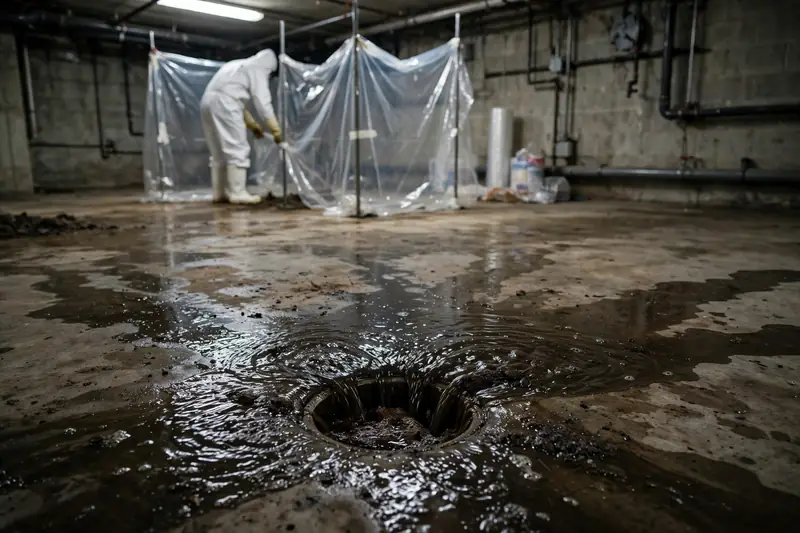
Rodent and animal waste. Mice, rats, raccoons and bats leave droppings, urine and nesting material in attics, crawlspaces and walls. Wet cleaning, careful removal and sanitizing are used rather than dry sweeping.
Related contamination. Sewage and mold often turn up on the same job. See sewage cleanup and mold remediation if either applies.
Not sure how bad it is? A short call usually tells you.Have your ZIP code ready. A local restoration pro answers.
Call (509) 555-0134How these situations come about in Spokane
There is no single reason, and the people involved are neighbors, relatives and friends. A few patterns come up locally.
- People living alone, including older adults in large homes, where a death or a fall can go unnoticed for some time. Older neighborhoods with many single-occupant homes, such as South Hill, see this.
- Mental health crises and substance use, which can bring about trauma scenes and unsafe conditions in the home.
- Homes with poor pest control. Attics and crawlspaces in older Spokane houses, and outbuildings and sheds on rural lots, let in mice and other animals. Deer mice live across eastern Washington.
- Long-term hoarding, often connected to grief, isolation or health decline.
- Vacant or abandoned properties where squatters or animals have lived.
If this just happened: what to do right now
- If someone may be hurt or may have died, call 911 first. Do not go further into the room than you need to.
- Do not enter a scene that police are working. The scene belongs to them until they say it is released. Cleanup cannot start before that.
- Do not touch or move items. There may be paperwork needed, and contamination is easy to spread.
- Keep children and pets out. Close the door to the affected room.
- Ventilate only if it is safe, from outside if possible. Do not use fans that push air through the rest of the house.
- Look after yourself. If you are overwhelmed, call a friend, your doctor or the 988 Suicide and Crisis Lifeline.
When you are ready to talk about the cleanup, a call is usually the easiest first step.
Water still spreading? Talk to a local restoration pro now.Have your ZIP code ready. A local restoration pro answers.
Call (509) 555-0134How a crew handles a scene
The process is the same in outline whatever the cause, and the crew explains it before starting.
- Quiet assessment. A technician looks at the space, notes the extent and discusses options with you. There is no pressure to decide on the spot.
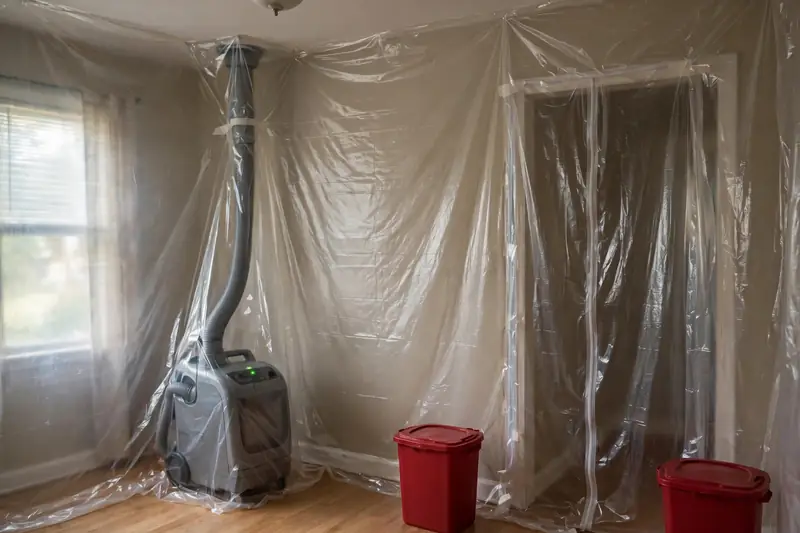
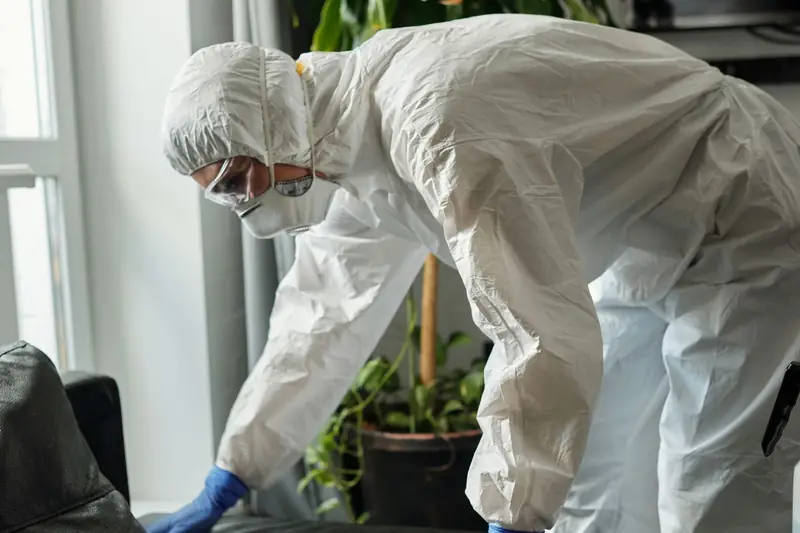
- Protection. Crew members wear full coveralls, double gloves, boots and respirators. The work area is isolated so nothing spreads into the rest of the house.
- Removal. Contaminated items and building materials are removed and packaged in labeled containers. Regulated waste goes to licensed disposal, not into your trash.
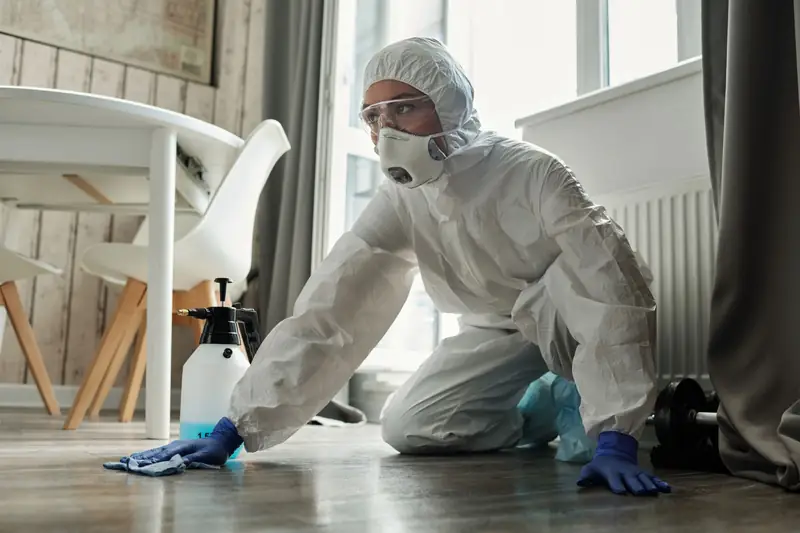
- Cleaning and disinfecting. Hard surfaces are cleaned, then treated with a hospital-grade disinfectant. Where fluids reached the subfloor, that layer is cut out and replaced if needed.
- Odor control. Air scrubbers, hydroxyl generators or sealers handle what remains in the air and in the structure.
- Final walk-through. You or your representative see the result. Records are provided for insurers, landlords or the estate.
Many crews can work with unmarked vans and without branded clothing when asked, which lets the work happen without drawing the attention of the street.
Need someone to look at it today?Tell them your ZIP and what happened. A local pro picks up.
Call (509) 555-0134What shapes the cost of biohazard cleanup
Every scene is different, so there is no honest flat figure. Hoarding jobs vary most with the volume of material, and unattended death jobs vary with how long the person went undiscovered. The crew that walks the scene gives you the real cost, ideally in a written scope before work starts.
| What affects the cost | Why it matters |
|---|---|
| Type of material | Blood, bodily fluids, rodent waste and hoarded debris each call for different products, protective gear and disposal. |
| Area affected | A single contained spot is a short visit. Fluids that soaked into subfloor or padding mean removal and rebuild. |
| Time since the event | Fluids and odor travel deeper into the structure as days pass. |
| Volume of contents | Hoarding cleanouts depend on how much has to be sorted, hauled and sanitized. |
| Odor treatment | Removing the source is the first step. Lingering smell may need extra treatment afterward. |
A fuller discussion is in the biohazard cleanup cost guide.
What to expect on the first call
You will be asked a few plain questions: what happened in general terms, which rooms are affected, whether police have released the property, and whether there is a time pressure such as a sale, a lease ending or family arriving. You do not need to describe anything graphic. Say if you want a discreet arrival, a particular time of day or no contact with a landlord or neighbors, and the crew will plan around it.
Ask whether the technicians are trained in bloodborne pathogen safety, how waste is disposed of, and whether the company is registered as a contractor with the Washington State Department of Labor & Industries (or, in Idaho, with the state licensing division). A crew that answers clearly and without hurry is the right kind.
Insurance and who pays
Some homeowners and renters policies cover cleanup after certain events, such as a death in the home or a crime, and some do not. Hoarding and pest-related contamination are usually excluded. If the home belongs to someone who has died, the estate or the property owner is normally responsible, and the cleanup may be covered as part of an estate settlement.
Call the insurer or the agent and ask directly what applies. Ask the crew for itemized documentation, because it speeds up any claim. The Washington homeowners insurance and water damage guide gives general background on how policies treat sudden events.
Areas crews serve
Crews work across Spokane and into North Idaho, including Spokane Valley and Coeur d'Alene. Smaller towns and rural properties are covered too, though response time varies with distance.
Sources and official resources
Service area
Biohazard Cleanup help across the Spokane area
Choose your town or neighborhood for local details, ZIP codes and permit offices.
Spokane neighborhoods
Spokane County, WA
North Idaho
Homeowner guides
Guides about biohazard cleanup
FAQ
Common questions
Straight answers to what Spokane homeowners ask most. Still unsure? Call and ask a local pro.
Call (509) 555-0134Do I have to be present while the crew works?
No. Many families prefer not to be. Crews usually walk the home with you or a representative first, then work on their own. You can ask for updates by phone and for photos of the finished result.
Will the neighbors know what is happening?
They do not have to. Many crews can arrive in unmarked vans and wear plain clothing under their protective gear. Say you want a discreet visit when you call.
What happens to personal belongings and keepsakes?
The crew sets aside photos, documents, jewelry and other items you want to keep, and cleans those that can be safely cleaned. Porous items that have been contaminated usually cannot be saved. Tell the crew what matters most before they begin.
Can the smell really be removed?
Yes, in most cases, but it takes more than air freshener. Odor lives in porous materials like subfloor, carpet and drywall. The source is removed, then deodorizing methods such as hydroxyl or ozone treatment, sealers and air scrubbers are used.
Is a landlord or tenant responsible?
That depends on the lease and the circumstances. Landlords often arrange or pay for cleanup in a rental, but not always. If you are unsure, ask your landlord in writing and keep records of the conversation.
How soon does it need to happen?
As soon as the police and any other agencies have released the scene. Fluids and odor spread into the structure as time passes, which makes the work larger and the cost higher.
Need biohazard cleanup help now?
Call now and a licensed restoration pro near you can walk you through the next hour and set up a visit.