Homeowner guide
Frozen Pipe vs Burst Pipe: How to Tell in 2 Minutes
One problem needs patience and a hair dryer. The other needs a shutoff valve and a phone call, and the symptoms overlap more than you would expect.
Have your ZIP code ready. A local restoration pro answers.
Updated November 12, 2026 · 5 min read
Check two things. First, whether water comes out of the taps at all. Second, does the water meter keep moving when every fixture is off? A blocked tap with a still meter means ice. A moving meter, a wet spot or the sound of running water means a pipe has split.
Frozen, burst or both
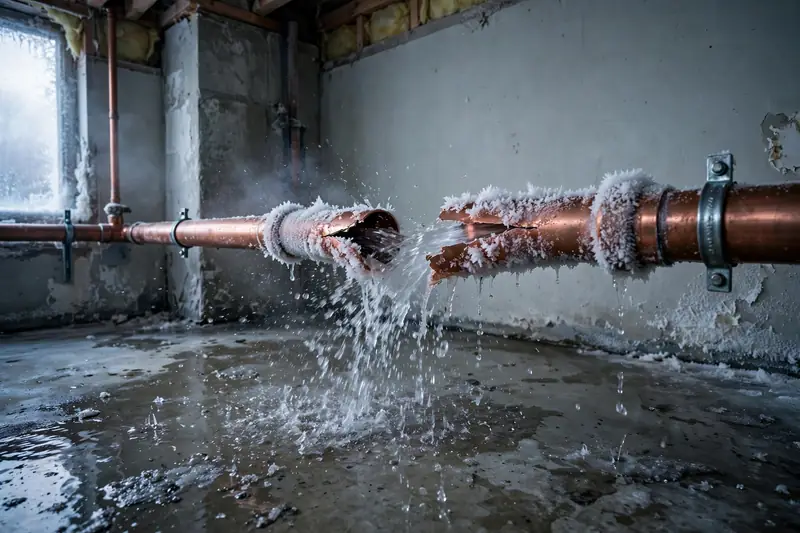
The two get confused because they feed each other. Water freezes in a pipe, the ice expands, and the pipe wall gives way at the weakest point. Then the ice thaws and water pours out of the crack. So you can wake up to a dead faucet at 6 a.m. and have a flooded hallway by noon, with the pipe "fixing itself" in between.
Spokane makes this a regular winter story. When a stretch of nights drops into the teens and single digits, the pipes that lose are the ones in exterior walls, crawlspaces, garages and under sinks on cold corners.
Signs a pipe is frozen
- A faucet gives a trickle, sputters, or gives nothing.
- Only one fixture or one side of the house is affected, while others run fine.
- Frost or a white coating shows on an exposed pipe.
- A pipe feels icy compared with the one next to it.
- Nothing is wet. No stains, no drips, no sound of water.
If every item on that list fits and the area is dry, you are most likely dealing with ice alone.
Not sure how bad it is? A short call usually tells you.Have your ZIP code ready. A local restoration pro answers.
Call (509) 555-0134Signs a pipe has burst
- A water stain growing on a ceiling or a wall, often a brownish ring with a darker center.
- Drywall that feels soft, bubbled paint, or a floor that squishes underfoot.
- The sound of running or hissing water when nobody is using any.
- Low water pressure that gets worse over minutes, not hours.
- A swollen section of pipe with a hairline split, or a spray pattern if the pipe is exposed.
- Wet insulation in a crawlspace, or drips from the floor joists above a basement.
Basement ceilings and the underside of upstairs bathrooms are good places to look first, since water follows gravity and shows up below the break.
The water meter test
This is the fastest way to settle the question when you cannot see the pipe.
- Turn off every faucet, the dishwasher, the washing machine and the ice maker. Make sure nobody flushes a toilet.
- Find your meter. In many Spokane homes it sits in a box near the street or the property line, and some homes have an indoor meter near the main valve.
- Lift the lid carefully. Look for the small low-flow indicator, often a triangle or a small wheel, and the sweep hand or the digits.
- Write down the reading, wait fifteen minutes with nothing running, and look again. A moving indicator or a changed number means water is leaving the system somewhere.
- If the reading changes, close your main shutoff valve inside the house and check again. If the meter stops, the leak is on your side of the valve.
A meter that does not move for fifteen minutes is a good sign but not a promise. A pinhole leak or a split in a pipe that is still partly iced can hide for a while. If the symptoms say "leak" and the meter says "fine," trust your eyes and check again in an hour.
Water still spreading? Talk to a local restoration pro now.Have your ZIP code ready. A local restoration pro answers.
Call (509) 555-0134What to do if it is frozen
Work slowly, because the thaw is where a split pipe turns into a leak.
- Open the tap on the frozen line and leave it open so melting water has an exit.
- Warm the pipe gently with a hair dryer, a heating pad or warm towels, starting near the faucet and moving toward the blocked section.
- Keep your main valve location in mind. If water suddenly sprays or drips while you thaw, close it right away.
- Once pressure returns, walk the length of the pipe and check every joint, then check the ceiling and walls below it.
- Leave a thin stream running for a while, and find out why it froze. An open crawlspace vent, a missing insulation batt, or a thermostat set too low is the usual cause.
Our guide on what to do when pipes freeze covers thawing methods and what never to use. If you cannot reach the frozen section, or it sits inside a wall, a plumber is the better call than a flame or a guess.
Need someone to look at it today?Tell them your ZIP and what happened. A local pro picks up.
Call (509) 555-0134What to do if it has burst
- Shut off the main water valve. Do this before taking photographs or making phone calls.
- Open the lowest faucet in the house to drain what is left in the lines.
- Turn off the breaker for any room with wet outlets or ceiling fixtures, and do not stand in standing water to reach a panel.
- Move rugs, electronics and furniture away from the wet area, and lift anything absorbent off the floor.
- Photograph the damage, the broken section and the meter reading.
- Call a plumber for the repair and a licensed restoration crew for the water. The burst pipe cleanup page explains what the crew does on arrival.
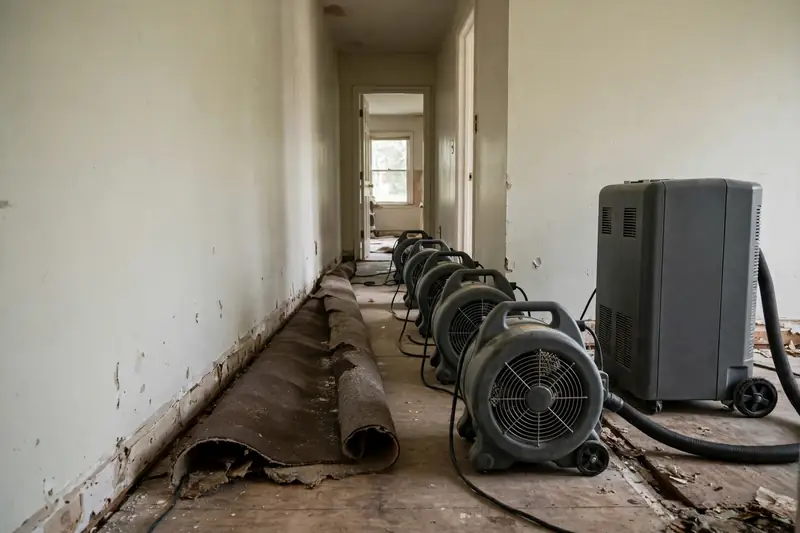
If the water is more than a few damp spots, pooling across a floor or coming through a ceiling, ask about emergency water extraction. Standing water spreads into subfloors and wall bottoms quickly, and removing it first speeds up everything after.
When it becomes a restoration job
Not every split pipe needs a crew. A small drip caught within minutes, onto a tile floor, wiped up and fanned dry, is a home repair. It becomes a restoration job when any of these are true:
- Water reached carpet, pad, hardwood or laminate.
- Drywall, plaster or insulation got wet and stayed wet for more than a day.
- Water ran inside a wall cavity or above a finished ceiling.
- The water ran for hours before anyone noticed, or the house was empty.
- You can smell damp, or you see staining that keeps growing after the leak stopped.
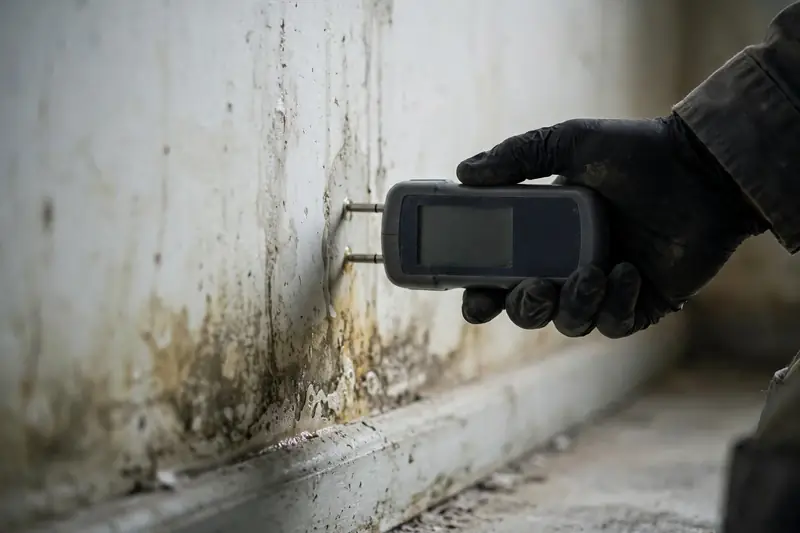
Clean water from a supply line is the easiest kind to dry, but it only stays that way for a short while. Once materials stay wet, mold can start, which is why a crew measures moisture with meters instead of relying on how things look. The difference between the emergency work and the rebuild is laid out in our mitigation vs restoration guide.
Cost and insurance
What the cleanup costs depends on how much area got wet, which materials were involved, whether the space is finished, how long the water ran, and when you call. The company that inspects your home can give you a written figure before work starts, and the plumber's repair is a separate bill. The burst pipe repair cost guide goes through the pieces.
Many homeowners policies cover sudden and accidental water damage such as a burst pipe, though they often do not cover slow leaks, and some expect that the home was kept heated. Take photos, save receipts for emergency steps and ask your agent what your policy requires.
Water still spreading? Talk to a local restoration pro now.Have your ZIP code ready. A local restoration pro answers.
Call (509) 555-0134Sources and official resources
Homeowner guides
Keep reading
FAQ
Common questions
Straight answers to what Spokane homeowners ask most. Still unsure? Call and ask a local pro.
Call (509) 555-0134Can a pipe be frozen and burst at the same time?
Yes, and it is the usual pattern. Ice forms in one spot and the split often opens a few inches away, where pressure built up between the ice and a closed fixture. The pipe may leak nothing until the ice melts, so a frozen pipe that was never checked afterward is still a suspect.
My faucet works fine but I hear water running in the wall. What is that?
Running water with every fixture closed points to a leak or a split pipe, not a frozen one. Shut off the main valve and see whether the sound stops. If it does, the leak is somewhere on the house side of the valve.
How long can I leave a pipe frozen before it becomes a problem?
A pipe that is only frozen and has not split can sit blocked for a while without harm, but you cannot see inside it. If you can reach the section, warming it gently is safer than waiting for a warm afternoon to do it for you.
Do I need a plumber or a restoration company?
A plumber fixes the pipe. A restoration crew deals with the water that already got out. If the pipe split and wet anything, you usually want both, and the drying should not wait on the repair appointment.
Will my insurance care whether it froze first?
Insurers often ask what caused the loss, and a freeze is a common cause of a covered burst pipe. Policies differ on heat requirements and on who pays for the repair versus the cleanup, so call your agent and describe the timeline honestly.
Water where it shouldn't be?
Call now and a licensed restoration pro near you can walk you through the next hour and set up a visit.