Spokane County, Washington
Water Damage Restoration in Otis Orchards
Once a railroad stop in apple country, now small acreages and older farmhouses at the Idaho line. The water problems here come from gravel, wells and age.
Have your ZIP code ready. A local restoration pro answers.
- ZIP codes
- 99027
- County
- Spokane County
- From downtown Spokane
- about 15 miles
- Building permits
- Spokane County Building and Planning
- Contractor check
- Washington L&I contractor lookup
- Estimates
- Written estimate after an on-site inspection
Updated November 12, 2026
Otis Orchards started as a stop on the railroad and grew with the apple boom of the early 1900s. Farmers planted trees across the gravel flats, and in 1906 the Otis Mercantile opened to supply them. The Cobblestone School followed in 1908. The orchards are mostly gone, but the pattern of small acreages, long driveways and older farmhouses remains.
Housing on old orchard land
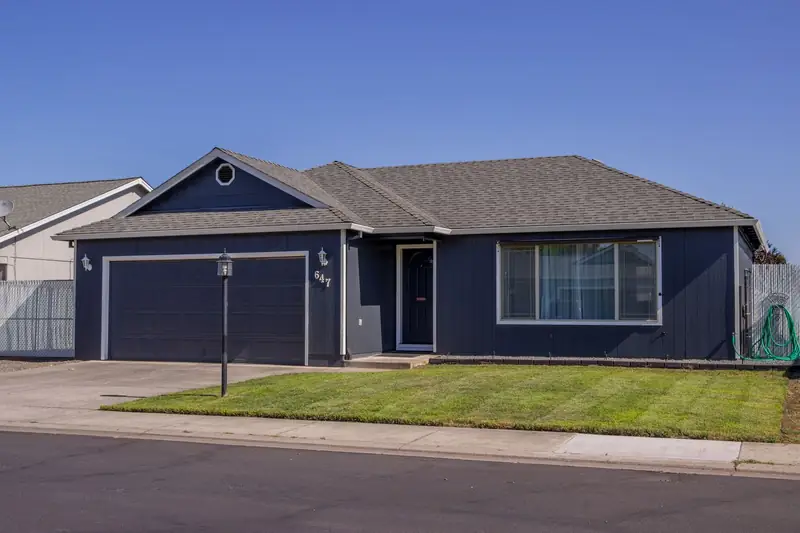
Otis Orchards sits east of Greenacres and just short of the Idaho line, with the Spokane River to the north. Wellesley Avenue and Harvard Road are the main east-west and north-south corridors people know. Homes range from farmhouses built in the early 1900s to ranchers and manufactured homes from the 1960s through the 1990s, plus newer houses on one- to five-acre lots. Many properties have a shop, a barn or a detached garage in addition to the house. The ZIP code is 99027.
The ground is coarse gravel over the Spokane Valley and Rathdrum Prairie aquifer. Water moves through it quickly, which has two effects. Surface water drains away well, but groundwater can rise close to the surface at certain times.
Where the water comes from
Spring groundwater
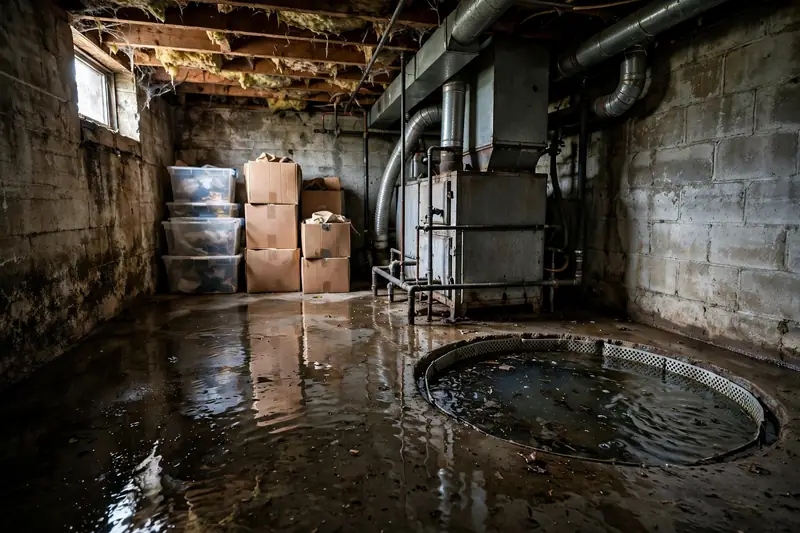
The river usually crests in late spring, and the aquifer rises with it. A crawlspace or basement that was dry all winter can see seepage in May and June. A sump that never ran in March starts cycling. The basement flooding page covers this kind of problem.
Century-old plumbing in farmhouses
Early farmhouses often have galvanized pipe, lead-soldered fittings and added bathrooms put in by whoever owned the place in the 1950s. Pipe runs through additions, lean-tos and porches that were never insulated well. A leak in a rear addition can go unnoticed for a season.
Wells and septic over gravel
Coarse gravel does not filter well, so septic effluent and floodwater can reach the aquifer quickly. That is why wells and septic systems get special attention here. A failed tank or an overflowing drain field is a sewage problem and a water quality problem. After any flood that touches the well, a bacterial test is the sensible step.
Outbuildings
Workshops and barns often have a frost-protected tap, a water line and a drain. These buildings get less heat and less attention. A pipe that splits in a shop floods a slab full of tools and stored belongings.
Water still spreading? Talk to a local restoration pro now.Have your ZIP code ready. A local restoration pro answers.
Call (509) 555-0134The local tip: mark the old ditch lines
Many Otis Orchards parcels still carry irrigation easements and ditch lines from the orchard days. Before you dig a drain, add a downspout or build a shed, find out where the buried and open lines run. A call to the water or irrigation district that serves your lot, or to the county, is faster than guessing. A drain tied into the wrong line can send water onto a neighbor and become your liability.
Insurance and old homes
Older farmhouses and manufactured homes can be harder to insure, and an adjuster may ask about the age of the plumbing, the wiring and the roof. Keep receipts for any repairs, and note the year the water heater was replaced. A clear record makes a claim easier to settle.
What people in Otis Orchards call about
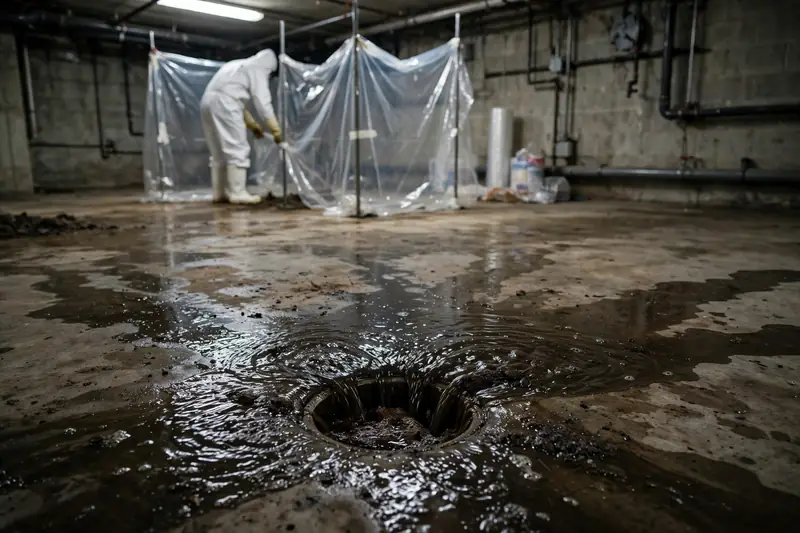
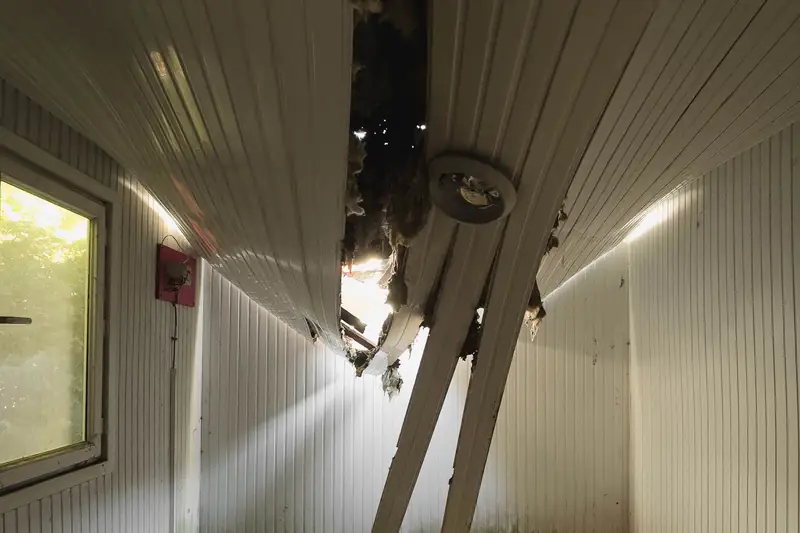
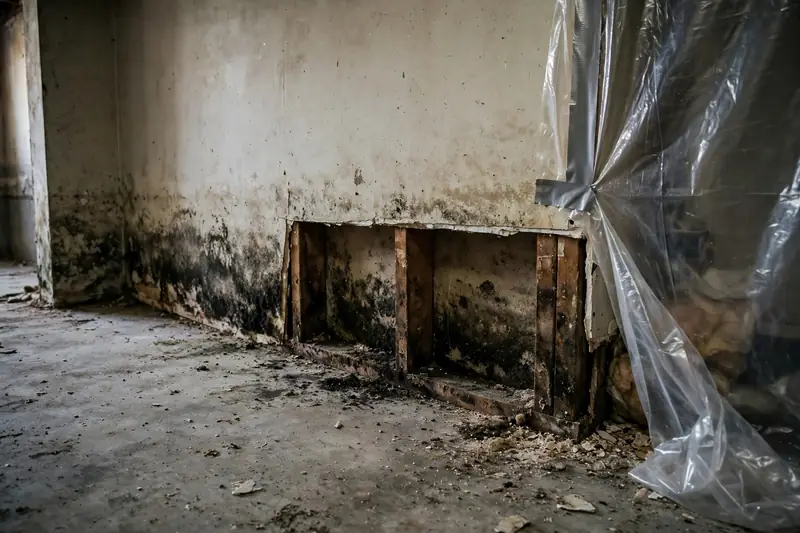
Water damage restoration is the common service after pipe, heater and appliance failures. Basement flooding peaks in spring. Mold remediation follows long-running crawlspace and wall leaks. Burst pipe cleanup follows hard freezes, especially in outbuildings and additions.
Because the community is close to the Idaho line, some owners also have mail, insurance agents or contractors on the other side of it. Washington contractors must be registered with the state Department of Labor & Industries, and you can look up any company on its website before you sign. Keep that in mind if a crew that quoted you works mainly across the border.
How a response usually works from the Spokane side
Otis Orchards is about 15 to 18 miles east of downtown Spokane. A crew from the Spokane side usually takes 25 to 35 minutes by Interstate 90 and then the rural roads. Rush-hour traffic through the Valley can add time. On acreage, tell the dispatcher about gates, dogs and which building has the water.
The crew will want to know the age of the home, whether there is a crawlspace or basement, and whether you have a well. On a multi-building property, they will likely check every building before they set equipment. They often start with extraction, then moisture mapping and drying.
The bill here is shaped by access more than anything. Long driveways and gates add minutes, and a barn or shop with a dirt floor needs different drying methods than a finished room. Slab floors in outbuildings, concrete or gravel, hold moisture for days and often need dehumidifiers more than air movers. The crew can tell you which is which once they have a moisture meter on it.
Your well and septic records matter in a claim. If you have a pump-out receipt or a well log, keep it where you can find it. They show how the system was working before the loss.
Need someone to look at it today?Tell them your ZIP and what happened. A local pro picks up.
Call (509) 555-0134What moves the bill in Otis Orchards
A one-room clean-water job is a small one, and crawlspace water removal and drying depends on access and how long the space stayed wet, which the crawlspace water damage cost guide explains in detail. If the loss includes a barn or shop, the estimate is broken out by building. Only the inspection produces a firm figure.
If you are on a well, ask the crew to note any visible water-line damage near the pump house when they inspect.
Sources and official resources
Services in Otis Orchards
What Otis Orchards homeowners call about
Tap a service for causes, cost factors and next steps.
Nearby
Areas near Otis Orchards

FAQ
Common questions
Straight answers to what Spokane homeowners ask most. Still unsure? Call and ask a local pro.
Call (509) 555-0134Why does my crawlspace in Otis Orchards fill up in early summer?
The gravel under the Valley carries groundwater that follows the Spokane River, which usually crests in late spring. A crawlspace on a low lot can see water well after the snow has left your yard.
My farmhouse has a hand-dug or shallow well. Should I be worried after a flood?
Yes. Shallow and older wells can draw in surface water more easily. After flooding, treat the water as unsafe until it has been tested and, if needed, the well has been disinfected.
Is Otis Orchards part of the City of Spokane Valley?
No. It sits in unincorporated Spokane County east of Spokane Valley, so building permits go through Spokane County, not the Valley permit center.
Does an old irrigation ditch near my property create a flood risk?
It can. Old ditches and laterals from the orchard days carry water in season and can overflow or seep into low areas. Know who maintains the one nearest your property and what its schedule is.
Which ZIP code is Otis Orchards?
Otis Orchards is 99027. It borders Liberty Lake, Greenacres and the Idaho line, so mailing addresses nearby can differ from the community you think you live in.
Water damage in Otis Orchards?
Call now and a licensed restoration pro near you can walk you through the next hour and set up a visit.