Homeowner guide
Winterize Your Spokane Home Against Frozen Pipes
A weekend of work in October and November that costs far less than one burst pipe in January.
Have your ZIP code ready. A local restoration pro answers.
Updated November 11, 2026 · 6 min read
Frozen pipes are mostly a preparation problem. Spokane gets regular hard freezes, and cold snaps with lows in the teens or single digits are normal. The pipes that fail are almost always the same ones: outdoor spigots, lines in crawlspaces, garage supply runs and anything in an exterior wall. This checklist works through them in order.
Pick a weekend in October or November
Set aside two to three hours and a handful of supplies: foam pipe sleeves, a few foam hose bib covers, caulk or foam sealant, a flashlight, and a small tool kit. Doing the work before the leaves come down is ideal, but mid-November still beats waiting for the first freeze warning.
1. Hose bibs and outdoor lines
Outdoor faucets are the most common failure point.
- Disconnect every hose. Even a short length of hose traps water that freezes and pushes back into the pipe.
- Drain the faucet. Open it and let the last water run out.
- Find the interior shutoff. Many homes have a valve inside, often in the basement or crawlspace, that feeds only the outdoor spigot. Close it, then open the outside faucet to drain the pipe. Leave the faucet open a crack so any trapped water can expand.
- Cover the spigot. If you have no interior valve, install an insulated foam cover on the outside. Frost-free sillcocks, which place the valve inside the heated wall, still need the hose removed because a hose can keep them from draining.
- Drain sprinkler systems with a compressed-air blowout before the first deep freeze. Irrigation backflow assemblies and exposed pipes are often damaged.
Not sure how bad it is? A short call usually tells you.Have your ZIP code ready. A local restoration pro answers.
Call (509) 555-01342. Crawlspace and foundation vents
Homes with crawlspaces have long runs of supply pipe and a lot of cold air.
- Close the foundation vents for the winter if your crawlspace has manual vents. Open them again in spring to let moisture escape.
- Check the access hatch for gaps. A hatch that does not seal pulls cold air across pipes.
- Look for missing insulation on the underside of the floor and around the rim joist. Gaps near pipes are frozen-pipe invitations.
- Fix any torn vapor barrier so ground moisture does not condense on pipes.
- Seal penetrations where pipes, wires or ducts pass through the rim with spray foam or caulk.
If your crawlspace already has standing water or a musty smell, deal with that before you close it up, because a sealed space with moisture can breed mold. See the water damage restoration page for what a dry-out involves.
3. Garage and outbuilding supply lines
Garages often have a laundry hookup, a utility sink, or a line that runs through to a shop or an exterior wall.
- Insulate any exposed supply lines with foam sleeves.
- Keep the garage door closed in cold weather. A few hours open on a 10-degree night can freeze lines.
- If the garage is not heated, consider shutting off and draining the supply to a hookup you are not using.
- Seal the gap beneath the garage door and the wall between garage and house.
- Do not store water-filled containers where they could freeze and burst.
For detached shops, well houses and barns, the safest approach is to drain the lines or to use thermostat-controlled heat cable, and to keep a small heater with a thermostat in a well house.
4. Attic and exterior wall pipes
Pipes in outside walls and under insulated attic floors are exposed to cold air on one side.
- Open the cabinet doors below sinks on exterior walls during cold nights so warm room air reaches the pipe.
- Add insulation to exterior-wall cavities where there are gaps.
- In an attic, make sure insulation covers the pipes and does not block recessed vents.
- Seal drafts around pipe penetrations at the sill and at the roof.
Need someone to look at it today?Tell them your ZIP and what happened. A local pro picks up.
Call (509) 555-01345. Thermostat settings and leaving town
The furnace is your main freeze protection, so set it with care.
- While you are home: keep the thermostat at a normal setting. Dropping it at night by a few degrees is fine.
- When traveling: hold the heat at 55 degrees or higher. A setting below that saves little and risks the coldest corners of the house.
- Open interior doors to rooms with plumbing so heat circulates.
- Ask a neighbor or friend to check the home every day or two, especially during a cold snap or a storm.
- Consider a smart thermostat or a temperature sensor that texts you if the house cools down. Pair it with a water leak sensor near the water heater and under sinks.
- For long trips, shut off the main water, drain the system and turn off the water heater. A plumber can help if you have never done it.
Water still spreading? Talk to a local restoration pro now.Have your ZIP code ready. A local restoration pro answers.
Call (509) 555-01346. Heat tape and heat cable
Electric heat cable is common on exposed pipes and in crawlspaces, and it can be useful if used correctly.
- Choose a product rated for your pipe material (metal, plastic, PEX), and follow the label for how it is wrapped.
- Prefer self-regulating or thermostat-controlled cable. Older tape without a thermostat can overheat.
- Do not overlap the cable on itself unless the label says you can.
- Plug it into a GFCI outlet. Check the cord, plug and connections each autumn.
- Do not wrap it with ordinary insulation unless the maker approves it, because trapped heat can damage the pipe.
- Replace any cable that is cracked, brittle or discolored.
- Remember that heat tape fails when the power does. Do not rely on it as the only plan.
7. The furnace, gutters and the roof
A furnace that fails in a cold snap puts every pipe at risk. Replace the filter, listen for odd noises, and have the system checked in the fall. Avista Utilities supplies electricity and gas across most of the region, and outages during storms happen, so keep a plan for heat. A fireplace or wood stove can help in a power failure if used safely.
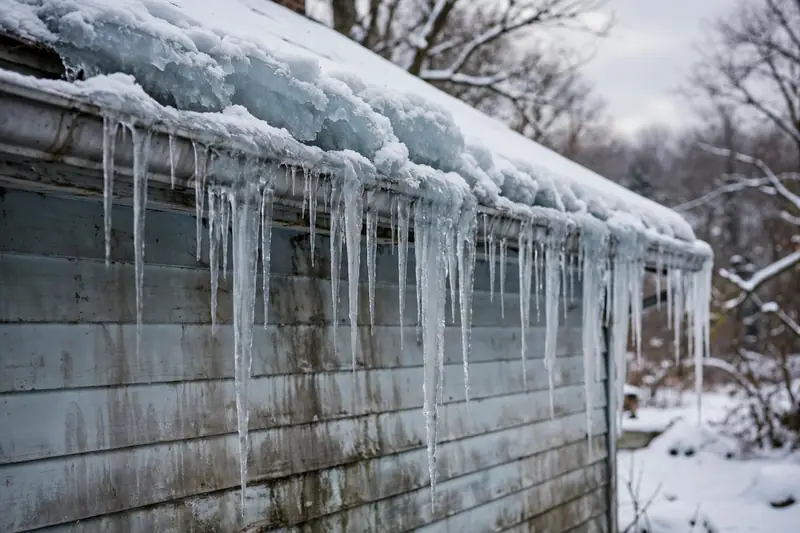
Clean gutters and downspouts before snow. Ice dams in heavy-snow winters can force water under shingles and into attic insulation and ceilings. A roof leak water damage problem is a different job from a frozen pipe, but both begin with the same cold week.
8. Know your shutoffs and your emergency plan
Walk through the house with everyone who lives there and find:
- The main water shutoff
- The water heater shutoff (gas or electric)
- The breaker panel
- The outdoor spigot shutoffs
Tape the plumber's number on the inside of a cabinet. Our guide on what to do when pipes freeze covers the emergency side.
A quick check list you can print
- Hoses off, spigots drained or covered
- Sprinklers blown out
- Crawlspace vents closed and hatch sealed
- Exposed pipes wrapped with foam
- Heat cable inspected and plugged into GFCI
- Garage door seals checked
- Thermostat plan for travel set
- Furnace serviced
- Main shutoff located and tested
If a pipe still fails
Even a good plan can lose to a strange cold snap. If a pipe does burst, shut off the main, call a plumber and a restoration crew, and document the damage. Costs vary; the water cleanup side and the plumber's repair are separate bills, and the inspection gives you a real figure. The burst pipe repair cost guide and the page on burst pipe cleanup explain how it usually goes.
Homes on larger rural lots north of the city, including those around Mead and Deer Park, tend to have longer exposed runs, well houses and outbuildings, so they deserve extra time on this list. The earlier you check, the less it costs.
Water still spreading? Talk to a local restoration pro now.Have your ZIP code ready. A local restoration pro answers.
Call (509) 555-0134Sources and official resources
Homeowner guides
Keep reading
FAQ
Common questions
Straight answers to what Spokane homeowners ask most. Still unsure? Call and ask a local pro.
Call (509) 555-0134When should I winterize in Spokane?
October into early November is the safe window. Overnight lows can drop below freezing by then, and a surprise early cold snap can arrive before the leaves are off. Finishing before the first hard freeze is the goal.
How low can I set the thermostat when I travel?
Many people hold the heat at 55 degrees or a bit higher, and open cabinet doors on exterior walls. Colder settings save little and raise the risk, and a power outage while you are away is a gamble you cannot watch.
Is heat tape safe?
Modern, thermostat-controlled heat cable that is rated for the pipe type is generally safe when installed exactly as the maker directs. Old, damaged or non-rated tape can start a fire, so replace it if the cord is cracked or the plug looks scorched.
Should I shut off the water if I am away all winter?
For a long absence, shutting off the main and draining the lines is the safest approach, if the home has no fire sprinklers or other reasons to keep the water on. Talk to a plumber before draining an unfamiliar system.
Can I wrap pipes with towels and tape?
It helps a little, but rated foam sleeves or fiberglass wrap do a much better job. Wrapping does not generate heat, so it only slows freezing. It still needs warm air or a heat source to work.
Water where it shouldn't be?
Call now and a licensed restoration pro near you can walk you through the next hour and set up a visit.