Spokane Valley, WA
Basement Flooding in Spokane Valley
Valley soil drains well until it does not. Here is what causes lower-level flooding in local homes and what a cleanup looks like.
Have your ZIP code ready. A local restoration pro answers.
Updated November 12, 2026
If you picture a basement flood in Spokane, you might picture a hillside house with a clay layer. The Valley is different. Much of it sits on coarse glacial gravel over the aquifer, so surface water usually soaks away. The floods that do happen tend to come from a handful of predictable failures, and knowing which one hit your house shapes the cleanup.
The usual causes in Valley homes
Window wells. Split-levels and daylight basements in the Valley often have egress or small basement windows set in shallow metal or concrete wells. Leaves and debris plug the drain at the bottom, and a fast thaw sends water over the sill.
Seasonal water table. In spring, groundwater can rise in lower areas, especially closer to the river. A basement slab poured in the 1960s often has hairline cracks and an open joint where the wall meets the floor. Water follows those paths.
Sump pump failure. If your home has a pump, it may be older than your mortgage. Float switches stick and power outages during storms leave the pit to fill.
Interior sources. A failed water heater, a washer line, or a frozen supply pipe floods a lower level just as readily as the weather does.
Sewer backup. Valley homes on public sewer can back up through a floor drain when the main is blocked. That is a different job, with different cost and safety needs, covered on our sewage cleanup page.
What the cleanup involves
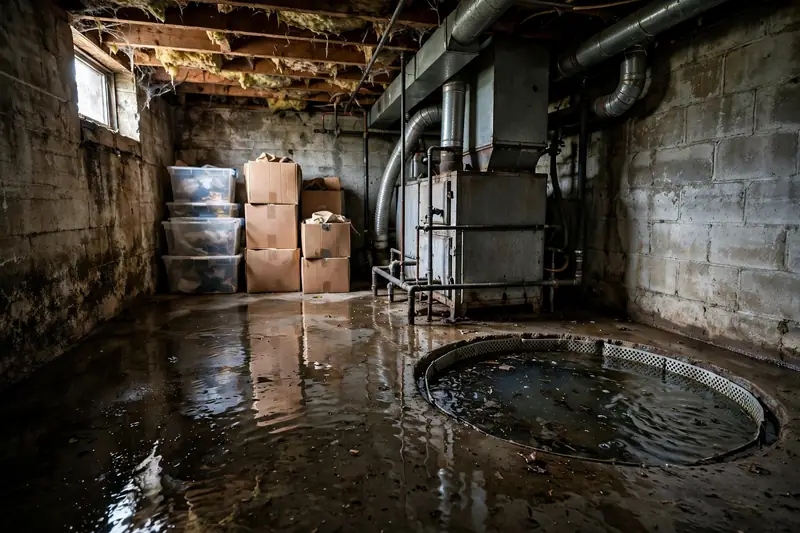
An unfinished basement with a concrete floor is largely a pump-out, a wash-down and a few days of dehumidification. The crew removes anything stored on the floor that is soaked, such as cardboard boxes and old rugs. Finished lower levels are a larger project. Carpet and pad usually go, and drywall gets cut off the bottom two feet or more, depending on how far the wicking went. Insulation behind it is typically replaced.
Some people want to run a shop vacuum themselves. That is fine for a few inches on a hard floor, but it will not dry the wall cavities.
Not sure how bad it is? A short call usually tells you.Have your ZIP code ready. A local restoration pro answers.
Call (509) 555-0134What moves the cost in the Valley
What a Valley basement job costs depends on what the crew finds, and the company inspecting it should put the figure in writing before work begins.
| Factor | Why it matters here |
|---|---|
| Lower floor of a split-level | Carpet, pad and baseboards on a half-level come out quickly, but wet trim and drywall add to the work |
| Daylight basement finishes | Bedrooms and family rooms mean more drywall, flooring and fixtures at the water line |
| Crawlspace homes | Houses without a full basement need access, drying and insulation checks under the floor |
| Sewer involvement | A backed-up floor drain is a separate sanitation job, not a normal clean-water dry-out |
The question is mostly how much was finished. Our post on what crawlspace water damage involves in Spokane covers the lower-level cases where the home does not have a full basement.
Right now
- Turn off power to the basement circuits if water is near outlets or the panel. If the panel itself is wet, call Avista and an electrician before touching anything.
- Do not wade in standing water that could be touching live wiring.
- Move belongings to higher shelves, and set wet items on plastic or foil.
- Find the source and stop it if it is an interior line.
- Note the water line on the wall with a marker and the time.
Water still spreading? Talk to a local restoration pro now.Have your ZIP code ready. A local restoration pro answers.
Call (509) 555-0134Insurance on flood events
Most homeowners policies do not cover groundwater coming in from outside. That usually needs a separate flood policy. Interior failures, such as a burst line or a water heater, are often covered if sudden and accidental. Check your policy before you describe the cause to anyone.
More background on the service is on our basement flooding page, and local conditions are summarized on the Spokane Valley page.
Need someone to look at it today?Tell them your ZIP and what happened. A local pro picks up.
Call (509) 555-0134Keeping it from happening again
Once the floor is dry, walk the outside of the house. Downspouts should end several feet from the foundation, and soil should slope away from the walls. Window wells need clear drains and covers that shed debris.
Test a sump pump by pouring a bucket of water into the pit before the March thaw. If it does not kick on, replace the float or the pump. A battery backup is a modest add-on that matters during storm power cuts.
What the crew will ask you
Expect questions about when the water arrived, how deep it got, whether it rose or came in as a trickle, and whether the sump ran. Those answers separate a groundwater problem from an interior failure and point toward the right dry-out plan. Have your water heater age, the panel location and any past flood history ready.
If you have photos of the basement from before the flood, share them. They help show which finishes were in place.
Sources and official resources
More in Spokane Valley
Other services in Spokane Valley
Nearby towns
Basement Flooding near Spokane Valley
Service area
Spokane Valley on the service map
Spokane Valley is about 9 miles from downtown Spokane. Crews cover it from both the Spokane and Valley sides.
Spokane neighborhoods
Spokane County, WA
North Idaho
FAQ
Common questions
Straight answers to what Spokane homeowners ask most. Still unsure? Call and ask a local pro.
Call (509) 555-0134My Valley home sits on gravel. Why would it flood at all?
Gravel drains quickly, but it does not stop a high water table from rising during snowmelt, or a window well from overflowing, or a sump pump from failing. Most Valley floods come from those specific failures, not from the soil itself.
Is the water in my basement considered clean?
It depends on the source. Water from a split supply line is clean at first. Groundwater and floor drain backups are not, and crews treat them as contaminated. Anything touching drywall or carpet for more than a day or two gets handled more cautiously.
What should I do about a finished lower level with a family room?
Move electronics and furniture up first, then shut off power to the lower level if water is near outlets. A crew will pull the baseboards and carpet pad, and cost climbs once drywall, trim and flooring are involved.
Is a sump pump worth installing after a flood?
For a home with a recurring spring problem, it often is. A plumber or drainage contractor can say if a pump and discharge line make sense for your lot. Discharge needs to run well away from the foundation.
Basement Flooding in Spokane Valley? Call a local pro.
Call now and a licensed restoration pro near you can walk you through the next hour and set up a visit.