Deer Park, WA
Basement Flooding in Deer Park
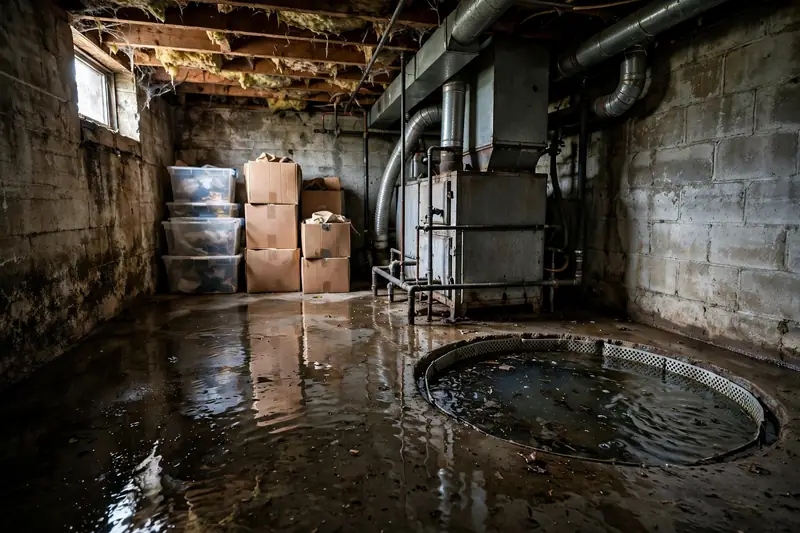
Wet springs, saturated drain fields and power outages make for a particular kind of basement flood on Deer Park lots.
Have your ZIP code ready. A local restoration pro answers.
Updated November 12, 2026
On a Deer Park property, a wet basement is rarely just a puddle. It might be spring melt from a hillside, a septic field that quit draining, or a sump that stopped when the power did. Each has a different fix.
How rural lots flood
Acreage homes sit on ground that was never graded for runoff the way a city subdivision is. A snowy winter followed by a quick thaw can saturate a slope above the house. Water then travels along the surface, or beneath it, until it meets the foundation.
Rural properties also lose power more often than in-town homes. A storm that knocks out the lines takes the sump pump with it, and if the house is on a well, the water supply goes too. The pit overflows while no one is home to notice.
Septic systems create an important difference. A drain field that is waterlogged in spring cannot take more flow. Showers and laundry push water back toward the house, and a floor drain or a basement toilet can overflow. This is wastewater, not groundwater, and it requires gloves, containment and disposal of porous materials.
In town, older homes with stone or block foundations may seep at the joints after prolonged wet stretches. Window wells on these homes are often under-drained.
Manufactured homes on piers or a skirted foundation see a related problem. Water pools under the floor, wets the insulation and wicks up into the subfloor.
The cleanup, step by step
First the crew identifies what kind of water they are dealing with and where it came from. That decides what can be saved.
- Pumps remove standing water, in stages if the surrounding ground is still wet.
- Porous finishes such as carpet, pad and lower drywall are cut out and discarded.
- Hard surfaces are cleaned and treated, then dried with fans and dehumidifiers.
- In a crawlspace, wet insulation is removed and the soil is dried or covered.
- The crew advises on where grading, a drain or a pump would help.
Septic-related water gets a stricter protocol, with sanitizing and disposal separate from regular cleanup.
Not sure how bad it is? A short call usually tells you.Have your ZIP code ready. A local restoration pro answers.
Call (509) 555-0134What changes the cost around Deer Park
The real figure comes from the inspection, and it is fair to ask the company for it in writing before work starts.
| Factor | Why it matters here |
|---|---|
| Finished or not | A bare concrete basement is simple; finished space adds drywall, flooring and fixtures |
| Wells and septic | A drain field or septic problem can mean wastewater, which changes the whole job |
| Sump pump | Whether the pump failed or the water table simply rose affects how much needs fixing |
| Crawlspace | Drying under a house on rural land calls for its own equipment and access |
If wastewater is involved, the sewage rules apply regardless of whether the basement is finished.
Immediate steps
Water still spreading? Talk to a local restoration pro now.Have your ZIP code ready. A local restoration pro answers.
Call (509) 555-0134If the water is rising from a drain, stop using water in the house: no laundry, no showers, no dishwasher. Shut off the pump breaker if the water source might be a broken well line.
Keep away from standing water that touches outlets. Wear rubber boots and gloves if you need to move items. Carry out furniture and mark the water line on walls with a pencil for later reference.
Septic and well notes
Tell the crew early if you are on septic or a well. Crews avoid dumping large amounts of wash water into a stressed drain field, and a well that got flooded at the wellhead may need testing before you drink from it. The county health district can explain testing steps for private wells.
Need someone to look at it today?Tell them your ZIP and what happened. A local pro picks up.
Call (509) 555-0134Keep reading
The basement flooding service page covers the standard process, and the Deer Park page shows other jobs nearby. If sewage is involved, read what to do after a sewage backup. Lingering dampness can lead to mold remediation in Deer Park.
Sources and official resources
More in Deer Park
Other services in Deer Park
Service area
Deer Park on the service map
Deer Park is about 21 miles from downtown Spokane. Crews cover it from both the Spokane and Valley sides.
Spokane neighborhoods
Spokane County, WA
North Idaho
FAQ
Common questions
Straight answers to what Spokane homeowners ask most. Still unsure? Call and ask a local pro.
Call (509) 555-0134Can a failing septic drain field flood my basement?
A saturated or failing drain field can slow the system, and wastewater may back up into the lowest drain. That water is contaminated and needs professional cleanup.
My sump runs on a well pump circuit. Does that matter?
It matters during a power loss, because both stop. A battery backup for the sump is worth discussing with a plumber.
Do manufactured homes flood the same way?
They usually have no basement, so water collects in the crawlspace under the home and soaks the floor system. The cleanup targets insulation and the underside.
Should I call the county about flooding on my road?
If water is covering a road or culvert, report it to the road authority for your area. Cleanup inside your home is a separate matter you can start right away.
Basement Flooding in Deer Park? Call a local pro.
Call now and a licensed restoration pro near you can walk you through the next hour and set up a visit.