Mead, WA
Basement Flooding in Mead
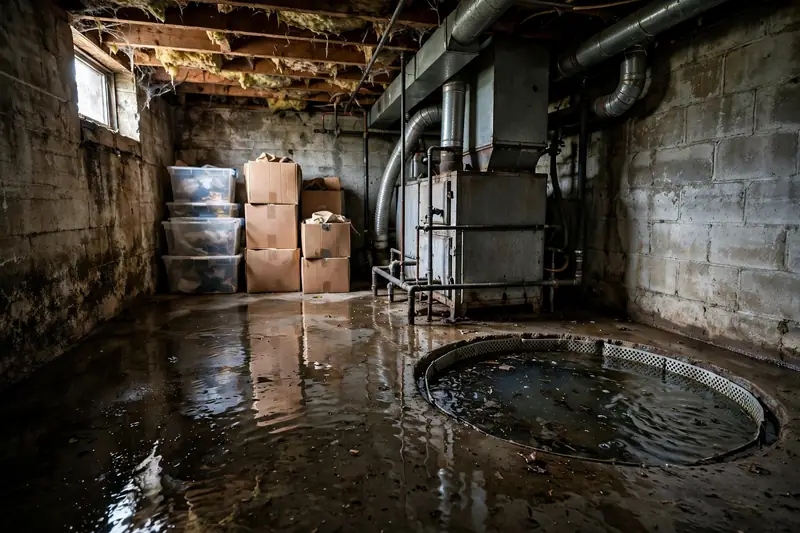
Daylight basements, sump pumps and spring thaw make up most Mead flood calls. Here is how the cleanup usually goes.
Have your ZIP code ready. A local restoration pro answers.
Updated November 12, 2026
Plenty of homes around Mead are built on sloped lots with walk-out or daylight basements, finished with a family room, a bedroom or a bar. A finished level with carpet and drywall holds a lot of money, and it sits at the bottom of the hill where runoff ends up.
How Mead basements end up underwater
The big cause is snowmelt. Mead gets deep snow, and a quick warm spell with rain on top of it sends a lot of water toward foundations at once. Newer subdivisions have drainage swales, window wells and downspout extensions. When a swale is plugged with leaves, or a downspout dumps next to the footing, the water finds the lowest point and goes in.
A second cause is the sump. Many homes here have a pit and pump in the lowest corner. A pump that sat idle all summer may stick on its float, or the discharge line may freeze outside, and the pit overflows into the room.
Hillside lots can have a third issue. Rock and clay layers hold water above them, and that water travels sideways until it meets your wall. This kind of seep shows up as a damp line or a trickle at the footing in spring, not a flood from one storm.
On acreage with a septic system, a saturated drain field can slow down, which is worth mentioning to the crew so floor drains and cleanouts get a look.
What the work looks like
A flood crew starts with testing. If the water came from rain or snowmelt through a wall, it is generally treated as contaminated with soil and bacteria. That affects the plan: porous items such as carpet and pad are usually discarded, not dried.
Typical steps for a Mead basement:
- Pump or extract standing water, working in stages if the ground outside is still saturated.
- Remove wet flooring, baseboard and the lower section of drywall.
- Spray surfaces with an antimicrobial and set drying equipment.
- Check the sump, window wells and exterior grade for the entry point.
Finished daylight basements take longer than unfinished ones because there are more layers to dry. Expect around three to five days of drying once the water is out, longer if framing is saturated.
Not sure how bad it is? A short call usually tells you.Have your ZIP code ready. A local restoration pro answers.
Call (509) 555-0134What changes the cost in Mead
Treat any early guess as rough. The crew that walks the space should give you the real figure, preferably in writing.
| Factor | Why it matters here |
|---|---|
| Bare or finished | Concrete and utility space dry out simply; drywall, flooring and fixtures add demolition and rebuild |
| Walk-out level | A hillside walk-out with a bath and wet bar has more to remove than a utility basement |
| Sump failure timing | A sump caught early limits how far water spread across the floor |
| Crawlspace | Pumping and drying under a house calls for different equipment and access |
Those four usually explain most of the difference between one Mead job and the next.
Right now
Water still spreading? Talk to a local restoration pro now.Have your ZIP code ready. A local restoration pro answers.
Call (509) 555-0134Keep out of the water if the panel or outlets are underwater, and shut off power to the basement at the main breaker only if you can reach it dry. Leave the shop vac and the carpet cleaner in the garage for now. Carry out furniture, boxes and anything that can be saved, and photograph the water line on the walls before it dries.
Clear a downspout or window well if you can do it safely, since stopping new water matters as much as removing the old.
A yearly walk around the lot
Walk the lot after the first big storm each year. Look for a downspout that empties within a few feet of the wall, soil that slopes toward the house, and window wells packed with needles and leaves. Test the sump by pouring in a bucket of water, and make sure the discharge line exits well away from the foundation and is not buried in a drift. These checks take an afternoon and tend to cost far less than a flooded family room.
Need someone to look at it today?Tell them your ZIP and what happened. A local pro picks up.
Call (509) 555-0134More to read
Spring flooding is covered in the snowmelt flooding guide. For the service itself, see basement flooding cleanup, and the Mead page shows nearby services. If pipes caused the water, jump to burst pipe cleanup in Mead.
Sources and official resources
More in Mead
Other services in Mead
Service area
Mead on the service map
Mead is about 8 miles from downtown Spokane. Crews cover it from both the Spokane and Valley sides.
Spokane neighborhoods
Spokane County, WA
North Idaho
FAQ
Common questions
Straight answers to what Spokane homeowners ask most. Still unsure? Call and ask a local pro.
Call (509) 555-0134Why did my basement flood when it was not even raining?
Snowmelt is a common cause. Water from a deep snowpack soaks the ground slowly, and a saturated lot can push it through a floor joint days after the weather clears.
Should I wait for the water to go down on its own?
Not if it is inside your house. Standing water soaks into drywall and framing quickly. If groundwater is still rising outside, a crew may have to pump in stages so the walls are not stressed.
Is my sump pump enough protection?
It helps until the power goes out, which often happens during the same storms. A battery backup or water-powered unit is worth asking a plumber about.
Will my homeowners policy pay for groundwater?
Usually not. Groundwater and surface flooding generally need a separate flood policy, while a failed sump or a plumbing break may be treated differently. Check with your agent.
Basement Flooding in Mead? Call a local pro.
Call now and a licensed restoration pro near you can walk you through the next hour and set up a visit.