Homeowner guide
Spring Snowmelt and Basement Flooding in Spokane
Why the wet weeks between winter and summer find every weak spot in a basement, and what to fix before they arrive.
Have your ZIP code ready. A local restoration pro answers.
Updated November 11, 2026 · 5 min read
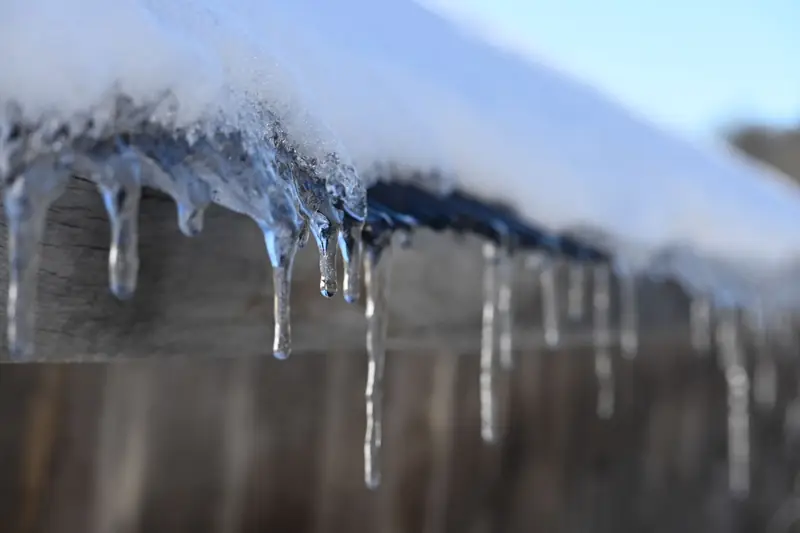
Most Spokane basement floods do not come from a storm. They come from a slow thaw. Snow that sat for weeks starts to melt, the ground underneath is still hard, and the water has to go somewhere. If the lot slopes toward your house, that somewhere is your foundation.
Why March and April are the problem months
Spokane averages well over 40 inches of snow a year, and heavy winters leave deep piles against foundations, along driveways and under eaves. A few things then line up.
Frozen ground behaves like pavement. Early in the thaw, the top layer is still hard. Meltwater and rain sheet across it instead of soaking in, and it follows the grade right to the house.
Rain on snow is the worst combination. A warm rain on top of a deep pack adds its own volume and speeds the melt at the same time. A day or two of that can deliver more water to a foundation than a month of ordinary weather.
Hydrostatic pressure builds. When the soil next to a basement wall becomes saturated, the water pushes inward and upward. It finds the cove joint where wall meets floor, hairline cracks, a pipe penetration, or an old window well.
Geology varies by neighborhood. Much of the Valley sits on coarse gravel that drains well, which is why many flat Valley basements stay dry. On the hillsides, basalt and clay layers can hold water in a perched layer, and that is what pushes through foundations in some South Hill and North Spokane neighborhoods. Homes in older areas also tend to have fieldstone or early concrete foundations that were never waterproofed.
Spots where water gets in
Walk the outside of your house when it is thawing and watch where water goes. These are the usual suspects.
Downspouts
A downspout that ends at the foundation hands the entire roof to your basement wall. A 1,500 square foot roof sheds roughly 900 gallons from one inch of rain (and snowmelt adds up faster than that). Extend downspouts at least five feet away from the wall, or tie them into solid drain pipe that carries water to a low spot or the street where allowed. Check that gutters are clear of fall leaves and that ice from winter has not pulled a section loose.
Grading
Soil should drop away from the house, with a rule of thumb of about six inches of fall over the first ten feet. Settling, old landscaping and added patios often flatten or reverse that. Fill with compacted clay-rich soil rather than mulch or loose topsoil, and keep flowerbeds from forming a bowl against the wall.
Window wells
A window well that fills with melting snow and has no drain is a small swimming pool in front of a basement window. Clear debris, make sure there is gravel below the sill level, and add a clear cover that keeps snow out while letting light in. If the well sits close to a downspout, move the downspout first.
Cracks and cold joints
Look inside, too. White powdery residue (efflorescence), dark lines at the base of the wall, and a musty smell suggest seasonal water. Hairline cracks that stay dry in July and weep in April are classic. A concrete contractor can seal or inject them, but get the exterior water moving away first.
Driveways and stairwells
Walkout stairwells and sloping driveways that end at a garage door funnel water straight inside. A trench drain at the bottom of a stairwell, or a berm at the garage, can make a big difference.
Not sure how bad it is? A short call usually tells you.Have your ZIP code ready. A local restoration pro answers.
Call (509) 555-0134Sump pumps: what to check before the thaw
If your basement has a sump pit, treat the pump as seasonal equipment.
- Pour a five-gallon bucket of water into the pit. The float should rise, the pump should run, and the pit should empty promptly.
- Look at the discharge line. It should leave the house and drain at least ten feet away, not run in a loop back toward the foundation and not freeze solid at the end.
- Confirm that the check valve (a one-way valve on the line) is working. If you hear a gush of water falling back into the pit after each cycle, it is stuck.
- Clear the pit of silt and gravel. A clogged intake burns out a motor.
- Consider a battery backup or a water-powered backup. Outages tend to arrive with the worst storms.
A pump has a service life, often something like seven to ten years under heavy use. If yours is older and has been working hard, replace it in summer, not during a flood.
If water has already come in
First, safety. If water is near outlets, the panel or a furnace, stay out and shut off power to the area at the breaker only if you can reach it without stepping in water. Call an electrician if you cannot.
Then move fast on the cleanup.
- Pull up what you can lift: small rugs, boxes, stored items on the floor.
- Use a wet vacuum or submersible pump on shallow water. Deep water should come out slowly, because emptying a flooded basement too fast against saturated soil can stress the wall.
- Open windows when the weather allows. Run fans, but remember that fans alone will not dry framing and drywall.
- Photograph the water line on the walls before it dries.
A licensed crew uses truck-mounted or portable extraction, then drying equipment, then moisture meters to confirm the structure is dry. The basement flooding page describes how the job usually goes, and water damage restoration covers the bigger picture when upstairs rooms or finished spaces are involved.
Water still spreading? Talk to a local restoration pro now.Have your ZIP code ready. A local restoration pro answers.
Call (509) 555-0134What it usually costs
For Spokane-area jobs, costs vary a great deal. An unfinished basement with a concrete floor is usually the lower end, and a finished basement with carpet, drywall, trim and furniture in play climbs with how much has to be replaced. The inspection gives you a real figure. For a detailed breakdown, see the basement flood cleanup cost guide and the water extraction cost guide.
Need someone to look at it today?Tell them your ZIP and what happened. A local pro picks up.
Call (509) 555-0134Insurance and snowmelt
This is the awkward one. Water that rises from the ground or seeps through foundation walls is generally treated as groundwater or flood, and standard homeowners policies usually exclude it. Flood from outside water typically needs a separate flood policy. A sump pump overflow or water backup endorsement may cover a failed pump or a backed-up drain, but it often has a low limit. Check your declarations page now, in the dry season, because most flood policies have a waiting period before they take effect.
A simple pre-thaw checklist
- Shovel snow off the foundation side of the house, down to the ground if you can.
- Clear window wells and storm drains near the property.
- Extend downspouts and verify gutters drain.
- Test the sump pump and discharge.
- Lift stored items onto shelves or pallets.
- Know where your electrical panel and the water main are.
Valley neighborhoods around Spokane Valley and hill neighborhoods like South Hill face different problems, gravel and quick drainage in one case and perched water and older foundations in the other. Knowing which one is yours tells you where to look first.
Water still spreading? Talk to a local restoration pro now.Have your ZIP code ready. A local restoration pro answers.
Call (509) 555-0134Sources and official resources
Related
Services and areas for this guide
Homeowner guides
Keep reading
FAQ
Common questions
Straight answers to what Spokane homeowners ask most. Still unsure? Call and ask a local pro.
Call (509) 555-0134When is a Spokane basement most likely to flood from snowmelt?
March and April are the usual window, especially after a heavy snow winter followed by a warm, rainy spell. Frozen ground early in the thaw keeps meltwater from soaking down, so it runs toward the foundation instead.
Does a sump pump guarantee a dry basement?
No. A pump only helps if there is a pit, a discharge line that carries water well away, and power during the storm. Pumps also fail from age, stuck floats and clogged intakes, so test yours before the thaw.
Is snowmelt flooding covered by homeowners insurance?
Usually not. Groundwater and surface water coming through walls or floors is generally excluded from a standard homeowners policy and needs separate flood coverage. Some policies add water backup or sump overflow coverage, so read the endorsements.
How soon should I get water out of a flooded basement?
As soon as it is safe. Wet drywall, carpet pad and stored cardboard start growing mold in a few days, and the lower walls keep wicking moisture even after the floor looks clear.
My basement only leaks in spring. Is that still a problem?
Yes. A seasonal seep means water is finding a path through a crack, a cove joint or a window well. It is cheaper to track that path down in summer than to repeat the cleanup every April.
Water where it shouldn't be?
Call now and a licensed restoration pro near you can walk you through the next hour and set up a visit.