Mead, WA
Mold Remediation in Mead
In Mead, mold usually grows where cold roofs, tight new construction and slow leaks meet. Here is how it gets handled.
Have your ZIP code ready. A local restoration pro answers.
Updated November 12, 2026
A mold problem in a Mead house often starts months before anyone sees it. A bath fan that vents into the attic, a window well that holds meltwater, or a leaking supply line behind a vanity can feed growth quietly through a winter.
Where it shows up in Mead
Newer homes are tightly built, which saves on heating and holds humidity in. When bath and kitchen fans are weak or exhaust into the attic instead of outside, moist air rises, hits the cold underside of the roof sheathing and condenses. By spring the plywood may be dark and spotted. Heavy snow on the roof keeps the deck cold longer, making this worse.
Crawlspaces are the other main site. Houses on the slopes and acreage have vented or half-sealed crawlspaces where spring meltwater sits on bare soil. If the vapor barrier has gaps, humidity climbs and the floor joists above start to grow mold.
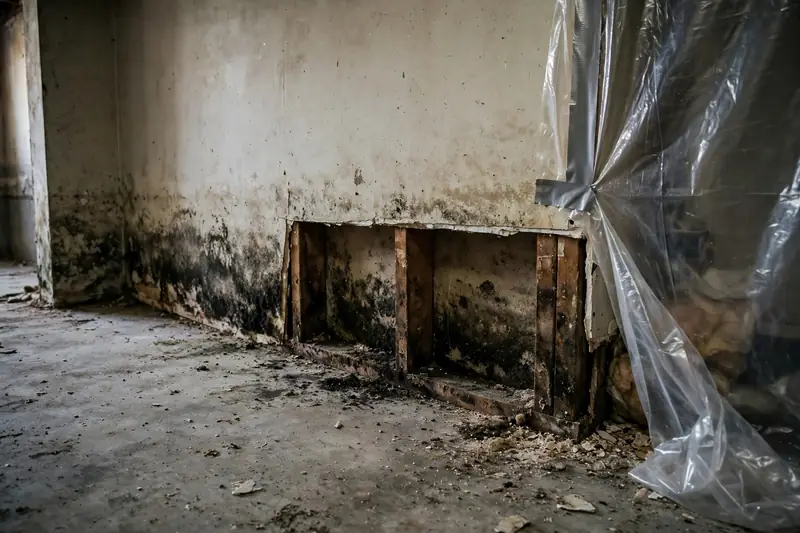
Finished lower levels make a third category. A small seep along a wall, hidden behind new drywall, can grow mold on the back of the board with nothing visible from the room.
Homes with well water and softeners also see leaks around plumbing connections in utility rooms, where a slow drip can feed mold for months.
What remediation includes
Remediation is not painting over stains. The standard sequence is:
- Find and stop the moisture. Without that, mold returns.
- Set up containment with plastic sheeting and negative air so spores do not spread to clean rooms.
- Remove porous material that is affected, such as drywall, insulation or damaged sheathing, and clean what can be kept with HEPA vacuuming and scrubbing.
- Dry the area, then confirm readings.
- Repair or replace what was removed.
In an attic, some jobs involve cleaning the roof deck surface and then fixing the ventilation. In a crawlspace, crews often lay a new vapor barrier afterward.
Not sure how bad it is? A short call usually tells you.Have your ZIP code ready. A local restoration pro answers.
Call (509) 555-0134What changes the cost here
The inspecting company gives the real figure after looking at the growth and the moisture source, and it should be written down first.
| Factor | Why it matters here |
|---|---|
| Attic surface area | A large two-story roof means a lot of sheathing and framing to clean |
| Crawlspace | Awkward access under hillside homes slows the work |
| Snow-driven moisture | Roof leaks and ice dams can keep the source active until the cause is fixed |
| Testing | An inspection visit, and sometimes a clearance test, are added steps |
A single bathroom is a much smaller scope than a roof attic.
While you wait
Water still spreading? Talk to a local restoration pro now.Have your ZIP code ready. A local restoration pro answers.
Call (509) 555-0134Stay out of the affected area if you can, and keep the door closed. Do not scrub or spray bleach on a large patch, since that can send spores into the air. Run a bath fan that vents outside, and switch off a forced-air system if the mold is near a return.
If anyone in the home has asthma or a weakened immune system, ask your doctor about staying elsewhere. Call 911 for breathing emergencies.
Insurance and selling
Insurers often cover mold only when it follows a covered event, such as a sudden pipe break, and exclude it when it comes from long-term humidity or a neglected leak. Ask your agent before work begins. If you plan to sell, keep the remediation paperwork and any clearance notes, since buyers and inspectors often ask whether past moisture was dealt with properly.
Need someone to look at it today?Tell them your ZIP and what happened. A local pro picks up.
Call (509) 555-0134Keep reading
The mold remediation service page gives the full process, and the Mead town page covers other services here. To understand what a test can and cannot tell you, read mold testing versus mold remediation. Mold sometimes follows a flood, so basement flooding in Mead is worth a look too.
Sources and official resources
More in Mead
Other services in Mead
Service area
Mead on the service map
Mead is about 8 miles from downtown Spokane. Crews cover it from both the Spokane and Valley sides.
Spokane neighborhoods
Spokane County, WA
North Idaho
FAQ
Common questions
Straight answers to what Spokane homeowners ask most. Still unsure? Call and ask a local pro.
Call (509) 555-0134Do I need a test before I call someone about mold?
Not always. If you can see it or smell it and the cause is clear, a crew can scope the job directly. Testing makes more sense when there is a smell but nothing visible, or when you want a clean result on paper.
Can a dehumidifier fix mold in my crawlspace?
It can slow new growth, but it does not remove mold that is already established. The material has to be cleaned or removed and the moisture source fixed.
Is attic mold common on newer Mead homes?
It happens in winter when warm air from bathrooms and kitchens leaks into a cold attic and condenses on the roof deck. Poor bath fan ducting is a frequent cause.
How long before I can use the room again?
Most small jobs finish within a few days, and larger ones take longer. The room is usually cleared after the work area passes a visual check and moisture readings are normal.
Mold Remediation in Mead? Call a local pro.
Call now and a licensed restoration pro near you can walk you through the next hour and set up a visit.