Homeowner guide
Washing Machine or Dishwasher Leak: What to Do and What to Watch For
Appliance leaks look small at the surface and big underneath. The water follows the floor framing, not the puddle you can see.
Have your ZIP code ready. A local restoration pro answers.
Updated November 12, 2026 · 6 min read
When a washing machine or dishwasher leaks, close the water supply to it, cut the power to the appliance, and get standing water up right away. Then look beyond the puddle, because the wet material is often under the flooring or inside the cabinet base. If water has traveled farther than a small towel can handle, bring in a crew with moisture meters.
Where appliances actually fail
Washing machines
Most washer floods start at a handful of places.
- Supply hoses. The two hoses behind the machine are under constant household pressure, even when the washer is off. That is the reason a failing hose can pour water while nobody is home. Rubber ones crack, bulge or split at the collar.
- The drain hose and standpipe. A drain hose that slips out of the standpipe, or a standpipe that backs up, will spill onto the floor during the spin cycle.
- Door or lid seals. On front-loaders, a torn or moldy door boot leaks along the bottom of the door. It tends to be a slow leak that goes on for weeks.
- The pump and internal hoses. A cracked pump housing or loose clamp drips under the machine, often unseen.
- Overloading and too much soap. Excess suds can push water out of the top or the vent.
Dishwashers
- The supply line. A small line, often under the adjacent sink, feeds the dishwasher through a fitting that can loosen or corrode.
- The drain connection. The drain hose ties into the sink drain or garbage disposal, and a clog downstream sends dirty water back into the machine and out the door.
- Door gasket and tub. Worn gaskets let water seep out at the bottom of the door.
- The float switch and inlet valve. If the valve sticks open, the machine keeps filling.
- Cracked spray arms and loose hose clamps that spray inside the cabinet.
Why the hidden damage is the real problem
The water you see on the kitchen or laundry floor is a small piece of what is happening. Gravity and the building structure move it.
Water runs under vinyl plank, laminate or tile, and into the gap where the flooring meets the cabinets. It wicks up the back of baseboards. It soaks the particleboard sides and floors of cabinets, which swell and do not return to shape. It runs along a joist and drips through the ceiling of the room below, or down into a basement or crawlspace. It can sit between the subfloor and the finished floor for days.
Signs of hidden moisture include floors that cup or buckle, a gap that opens along a seam, discolored grout lines, paint that bubbles near the baseboard, a faint sour smell, and cabinet doors that stop closing flush. If you see any of them after a leak, the area is wet beyond what a mop can fix.
Not sure how bad it is? A short call usually tells you.Have your ZIP code ready. A local restoration pro answers.
Call (509) 555-0134What to do right now
- Shut off the supply. Use the valve at the wall behind the washer (hot and cold), or the stop valve under the sink for a dishwasher. If it will not turn or leaks around the stem, close the whole house water main.
- Unplug the appliance or switch off its breaker, but only if the floor around the outlet and panel is dry and you can do it safely. If not, call an electrician and stay out of the wet area.
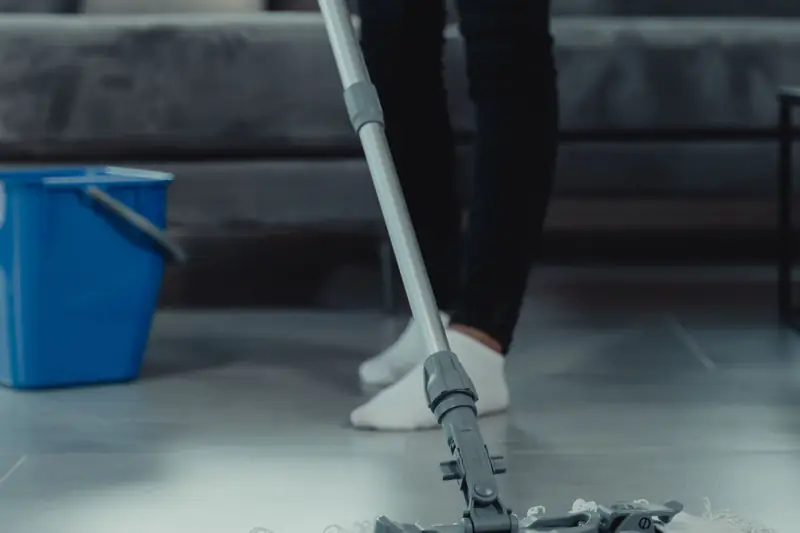
- Remove standing water with towels, a mop or a wet vacuum. Take small items off the floor.
- Pull the appliance out only if you can do it without lifting or dragging it through water. Many are heavy, and a tipped dishwasher or washer can injure you or tear a line loose.
- Open doors and cabinet fronts so air reaches wet surfaces. Run a fan on the area.
- Photograph everything before cleanup, including the hose or fitting that failed, so you can show the cause to an insurer or a plumber.
- Check the room below. Look at the ceiling underneath and in the basement for stains, drips or dampness.
Water still spreading? Talk to a local restoration pro now.Have your ZIP code ready. A local restoration pro answers.
Call (509) 555-0134When it becomes a restoration job
A towel and a fan handle a small spill of clean water on a sealed floor. Call a licensed crew when:
- Water ran for more than a few minutes, or you do not know how long it ran
- Water got under laminate, hardwood, vinyl plank or carpet
- Cabinet bases or drywall are wet to the touch
- A ceiling below is stained or dripping
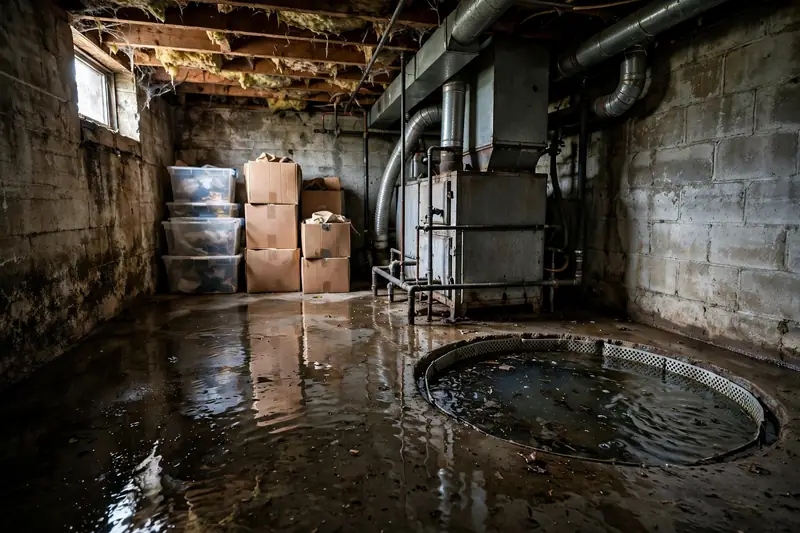
- Water ran into a basement or crawlspace
- You smell must or see dark spots on materials that stayed wet for a couple of days
A crew will extract water, check the floor, wall base and cabinets with meters, lift or cut flooring when the water is trapped, and set drying equipment. A typical clean-water job takes about three to five days to dry. The emergency water extraction page covers the first phase, and water damage restoration describes the drying and repair that follow.
Appliance water is usually clean at the start, but it can turn into gray water if a washer drains into the floor or a dishwasher backs up with food waste. Gray water or sewage backing out of a standpipe calls for different handling, and the sewage backup guide explains how that changes the response.
What affects the cost
Several things drive the final figure: how much water escaped, how long it was in place, whether it reached the subfloor or the room below, the type of floor, whether cabinets need to be pulled and rebuilt, and whether the water was clean or gray. The inspecting company gives a written estimate before it starts. The water extraction cost guide breaks down the factors in more detail.
Many homeowners policies treat a sudden hose failure as covered water damage and the worn appliance as a maintenance item. Slow leaks are commonly excluded, which is another reason to catch problems early. Read the insurance and water damage guide for Washington before you call your agent.
Need someone to look at it today?Tell them your ZIP and what happened. A local pro picks up.
Call (509) 555-0134Preventing the next leak
- Replace rubber hoses with braided stainless steel hoses, and put a date on them with a marker. Many plumbers suggest replacing them every five to seven years or sooner if you see bulges, rust at the ends or kinks.
- Use hoses with a bit of slack, not stretched tight, and keep the washer a few inches off the wall so hoses do not kink.
- Install a leak sensor on the floor behind or under each appliance. Models that send a phone alert are useful if you travel. Some shut off the water by themselves.
- Consider a washer shutoff that closes both supplies when the machine stops, or a single lever valve you can close with one hand.
- Close the washer valves if you leave for a long trip, and and see the winterizing guide for a fuller shutdown routine.
- Use a drain pan under the washer if it sits on a finished floor or above living space.
- Run a quick check each season: look behind the machine for damp spots, pull the dishwasher kick plate and look for water on the base pan, and check the door seals for tears or mold.
- Clean the drain pump filter on the washer and the dishwasher filter, and use the right amount of detergent.
A note for older homes around Spokane
Older Spokane homes often have laundry in basements with standpipes tied to old drain lines, and many have washers installed decades ago on original shutoffs that no longer fully close. If your valve will not close, ask a plumber to replace it before you need it in an emergency.
Water still spreading? Talk to a local restoration pro now.Have your ZIP code ready. A local restoration pro answers.
Call (509) 555-0134Sources and official resources
Homeowner guides
Keep reading
FAQ
Common questions
Straight answers to what Spokane homeowners ask most. Still unsure? Call and ask a local pro.
Call (509) 555-0134How long can a washer hose run before it causes real damage?
A burst supply hose can put out many gallons a minute, so a room can flood in the time it takes to finish a phone call. A slow pinhole drip does less harm hour to hour but can soak a subfloor over weeks. Either one needs the shutoff closed and the area dried.
Is a dishwasher leak under the cabinet urgent if the floor looks dry?
Yes, check it the same day. Water often collects in the cabinet base and under the flooring before it shows at the edge. Swollen particleboard, a musty odor, or a floor that feels soft near the sink are signs it has been wet for a while.
Will insurance pay for a leaking appliance?
Many homeowners policies cover sudden water damage from a failed hose or overflow, while the appliance itself is usually considered wear and tear. Long-term seepage is commonly excluded. Check your own policy and photograph the damage before you clean.
Do braided stainless hoses ever fail?
They do, though less often than plain rubber. The weak point is usually the rubber liner inside the braid or the crimped end fittings, so age matters. Replace them on a schedule and do not assume the metal outside means the hose inside is fine.
Can I run a fan and dry it myself?
For a small, clearly clean spill on a hard floor, yes. If water got under flooring, into cabinets, or into the wall behind the appliance, meters and drying equipment are the only way to be sure it is actually dry.
Water where it shouldn't be?
Call now and a licensed restoration pro near you can walk you through the next hour and set up a visit.