Homeowner guide
Basement Flood Cleanup Cost in Spokane: What Drives It
What decides the price of pumping, drying and cleaning a flooded basement in the Spokane area, and why a finished basement changes everything.
Have your ZIP code ready. A local restoration pro answers.
Updated November 11, 2026 · 4 min read
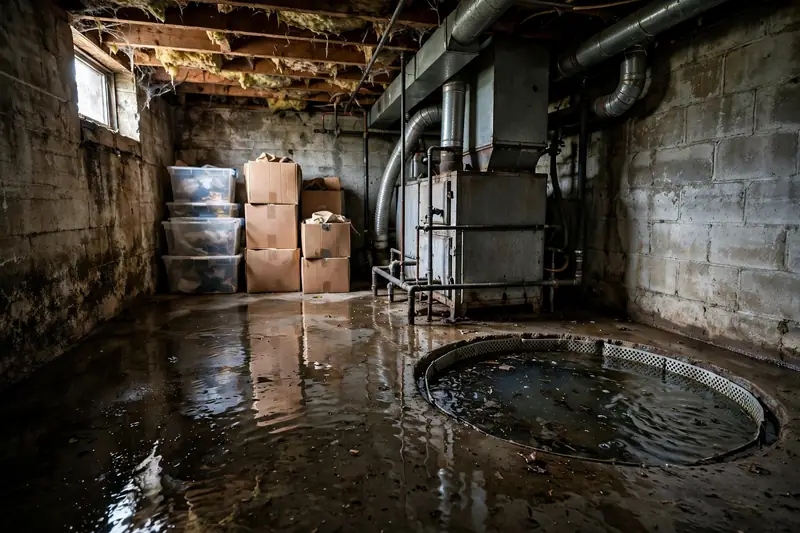
Basement flood cleanup costs vary mainly with one question: is the space finished or bare concrete? Water depth, the source of the water, how long it sat and what was stored there all move the figure too. The company that inspects your basement gives you the real number in writing, and a finished space with carpet, drywall and a bathroom almost always costs far more than an empty slab.
Water still spreading? Talk to a local restoration pro now.Have your ZIP code ready. A local restoration pro answers.
Call (509) 555-0134What changes the cost of a basement flood
| Cost factor | Pushes cost up when | Keeps cost down when |
|---|---|---|
| Finished vs unfinished | Carpet, drywall, trim and cabinets are wet | The floor is bare concrete |
| Water source | Groundwater or sewage is involved | A clean supply line failed |
| Depth and spread | Water reached walls, a furnace or a bathroom | A few inches stayed on the slab |
| Contents | Boxes, furniture and a freezer must be cleared | The room was nearly empty |
| Walls | Fieldstone or block walls hold moisture for days | Framed walls dry quickly |
| Time standing | Water sat through a weekend | Pumping began within hours |
| Rebuild | Flooring, drywall and a vanity must be replaced | Drying saves the finishes |
Rebuilding finished space is a separate scope. In a finished basement the rebuild can be larger than the cleanup itself.
What changes the number in a Spokane basement
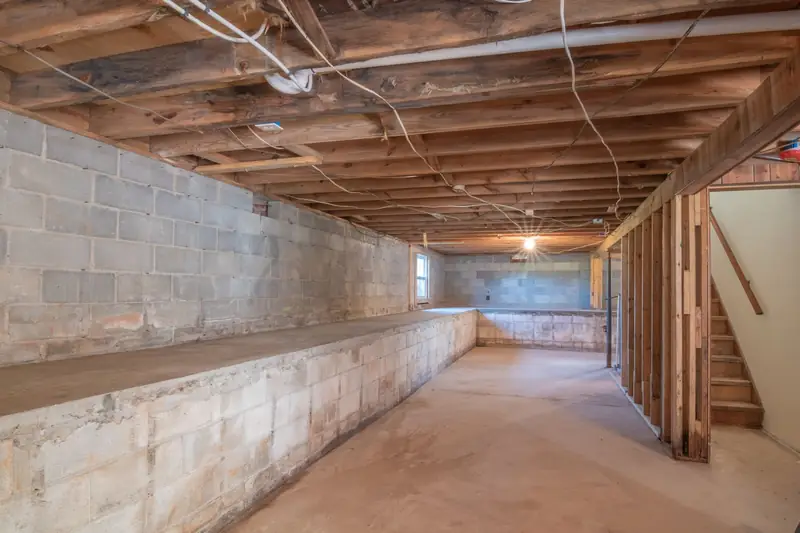
Finished versus unfinished. On bare concrete, a crew pumps, dries and treats. In a finished space, they cut out drywall to a safe height, pull carpet and pad, and often pull baseboards and lower cabinet toe-kicks. That is labor and disposal on top of drying.
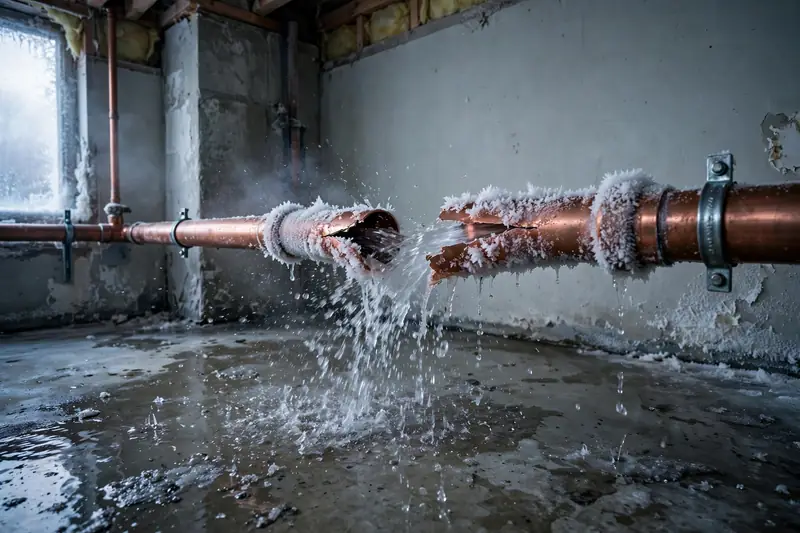
Water source. Groundwater from a high water table is not clean, even if it looks clear. Sewer backup is Category 3. A failed supply line is Category 1. Our guide to sewage backup cleanup costs covers the dirty end.
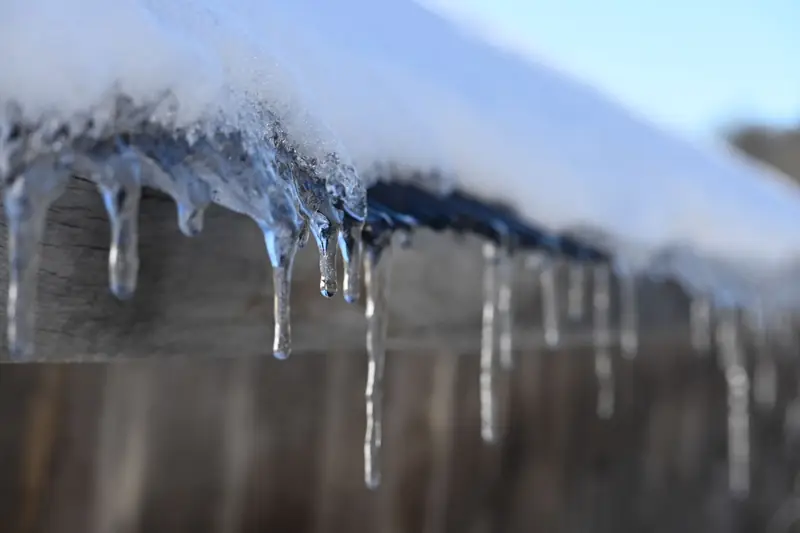
Spokane specifics. March and April bring snowmelt and rain-on-snow events that push water into basements, particularly in neighborhoods with old fieldstone or early concrete foundations such as Hillyard. In Spokane Valley and across the Rathdrum Prairie, gravel soils drain well, but the aquifer rises seasonally and can reach shallow basements. Homes in Post Falls and elsewhere in Kootenai County sit in that same gravel country. Our post on spring snowmelt basement flooding explains the timing.
Contents. A basement full of boxed holiday decor, stored furniture and a freezer takes longer to clear than an empty slab.
Not sure how bad it is? A short call usually tells you.Have your ZIP code ready. A local restoration pro answers.
Call (509) 555-0134Line items you will see
| Estimate line item | What it covers |
|---|---|
| Pump-out | Truck-mounted or portable pumps removing standing water |
| Extraction | Pulling remaining water from carpet and low spots, priced by area |
| Drying equipment | Air movers and dehumidifiers, counted by unit and by day, often built into the job |
| Carpet and pad removal | Pulling wet flooring and disposing of it |
| Drywall flood cut | Removing wet wall board to a safe height |
| Content pack-out | Moving and storing belongings away from the wet zone |
| Antimicrobial treatment | Spray on slab, framing and surfaces the water touched |
| Disposal | Dumpster or haul-off for ruined materials |
How insurance usually handles it
This is where basement floods get tricky. Many homeowners policies cover sudden and accidental water damage from inside the house, but not water that comes up through the floor, in through walls from saturated soil, or in from surface flooding. That group of events generally needs a separate flood policy or a water backup endorsement. If your claim is covered, your deductible comes first. Read your policy before you assume either way, and ask your agent specifically about sump pump overflow and what limit applies to it.
How to avoid overpaying
- Insist on moisture mapping. Basement walls hold water that drywall conceals. Readings should cover every wall and the slab.
- Ask for an itemized Xactimate-style estimate in writing before any tear-out begins.
- Separate pump-out from drying. A crew that bills a high flat rate for pumping may be loading up the early part of the bill.
- Verify the contractor. Look up the company on the Washington Department of Labor & Industries site, or on the Idaho Division of Occupational and Professional Licenses (DOPL) site if you are across the state line.
- Keep a log of discarded items with photos for your claim.
Need someone to look at it today?Tell them your ZIP and what happened. A local pro picks up.
Call (509) 555-0134A worked example: the finished basement in a 1970s split-level
Imagine a sump pump that loses power during a March windstorm while snowmelt is running. The finished lower level takes on a few inches of groundwater across most of its footprint. The crew pumps it out, pulls carpet and pad, cuts out drywall to a safe height, removes a wet bathroom vanity and sets dehumidifiers for five days. Replacing the flooring, drywall, vanity, trim and paint is a second phase that dwarfs the first. The same event in an unfinished basement would have been a pump-out, a few days of drying and an antimicrobial pass, a much smaller invoice.
Prevention items that cost less than a flood
A battery backup for the sump pump, a water alarm near the lowest floor drain and window well covers are modest purchases. Downspouts that discharge several feet from the foundation help too. None of these is guaranteed to stop a flood, but each one lowers the odds.
What to do right now
- Do not enter standing water until the breaker for the basement is off.
- Turn off the furnace and water heater if the water is near them.
- Unplug what you can safely reach and lift valuables to the first floor.
- Find the source: a pipe, the sump, a window well or groundwater.
- Photograph the waterline on the walls.
- Call a local crew. Read more on our basement flooding service page.
Water still spreading? Talk to a local restoration pro now.Have your ZIP code ready. A local restoration pro answers.
Call (509) 555-0134Sources and official resources
Related
Services and areas for this guide
Homeowner guides
Keep reading
FAQ
Common questions
Straight answers to what Spokane homeowners ask most. Still unsure? Call and ask a local pro.
Call (509) 555-0134Does homeowners insurance cover a flooded basement?
It depends on the source. A burst pipe or failed water heater is often covered, while groundwater seeping through the foundation or surface flooding usually needs a separate flood policy. Sump pump backup is an add-on on many policies.
How long before a flooded basement is dry?
Clean-water jobs often take 3 to 5 days of equipment. Concrete and block walls hold moisture longer than framing, so basements can run a bit past that.
Is it safe to walk into a flooded basement?
Not until power is confirmed off. Water can reach outlets, the furnace and the panel. If you are unsure, stay out and call your electrician or utility.
Can I run a shop vac and wait it out?
A shop vac handles a puddle. It will not dry carpet pad, framing or the wall cavities, and those areas can grow mold within a couple of weeks.
Will a sump pump prevent the next flood?
A sump pump with a battery backup helps a lot where groundwater rises. It does not help with a sewer backup or a failed supply line.
Water where it shouldn't be?
Call now and a licensed restoration pro near you can walk you through the next hour and set up a visit.