Homeowner guide
Water Mitigation vs Restoration
Two words that sound alike and cover two different phases of the same job, billed in different ways.
Have your ZIP code ready. A local restoration pro answers.
Updated November 11, 2026 · 5 min read
After a pipe bursts or a basement floods, you will hear two terms: mitigation and restoration. People use them as if they mean the same thing. They do not, and the difference changes what you pay, who you hire and when each step starts.
The short version
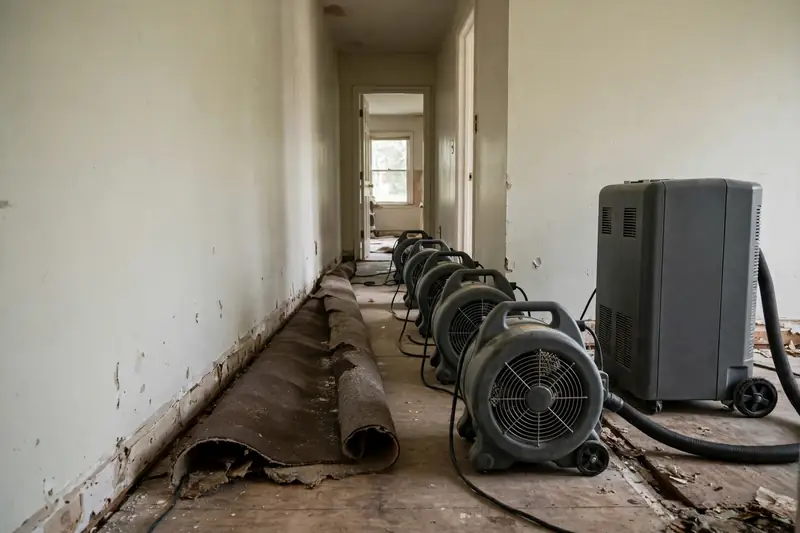
Mitigation is what you do to stop the damage from getting worse. It is the emergency phase: stopping the source, removing water, tearing out what cannot be saved, and drying what can.
Restoration is what you do to bring the home back to its pre-loss condition. It is the repair phase: new drywall, flooring, paint, cabinets, trim and sometimes a rebuilt room.
Mitigation protects the house. Restoration puts it back together.
Side-by-side comparison
| Mitigation | Restoration | |
|---|---|---|
| Main goal | Stop further damage and dry the structure | Repair or replace damaged finishes |
| When it happens | Immediately, usually within the first day or two | After the structure is confirmed dry |
| Typical tasks | Water extraction, tear-out, drying equipment, moisture monitoring, antimicrobial treatment | Drywall, insulation, flooring, paint, cabinetry, trim |
| Who does it | Restoration or mitigation crew | Restoration crew or a general contractor |
| Typical duration | About 3 to 5 days of drying | Days to several weeks, depending on scope |
| What drives the cost | Water category, area wet, equipment days | Materials replaced, finish level and how much was removed; the inspection gives you a real figure |
| Permits | Rarely needed | Sometimes, for structural or electrical work |
| Pricing basis | Equipment days, labor, square footage | Materials and labor by line item |
Not sure how bad it is? A short call usually tells you.Have your ZIP code ready. A local restoration pro answers.
Call (509) 555-0134What mitigation covers
Think of it as everything that happens before anything is rebuilt.
- Stopping the source. A plumber or you shut the water off and fix the pipe, or the roof gets a temporary cover.
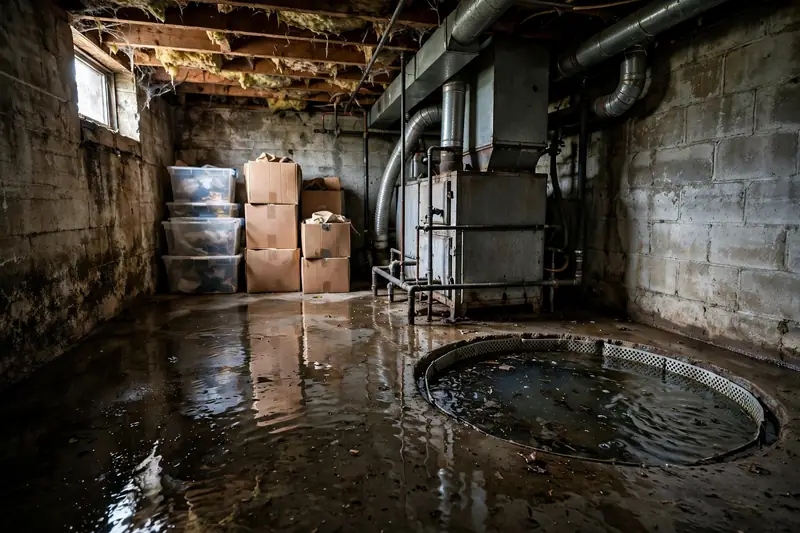
- Water extraction. Pumps and wet vacuums pull out standing water. The emergency water extraction service is the first step on most jobs.
- Inspection and mapping. The crew uses moisture meters and sometimes a thermal camera to find wet areas behind walls and under floors.
- Tear-out. Wet carpet pad, baseboards, insulation and drywall that cannot be dried in place come out. This is often a surprise to homeowners, but leaving wet materials in place creates mold risk.
- Drying. Air movers and dehumidifiers run until the materials return to normal moisture levels. A typical clean-water job takes three to five days.
- Monitoring. The crew returns daily to take readings and adjust equipment.
- Documentation. Photos, moisture logs and equipment records. These matter for insurance claims.
Equipment is often billed per unit per day, though it is usually built into the job price you see on the estimate.
What restoration covers
Once the structure reads dry, the repair phase starts.
- Replacing cut-out drywall, finishing and painting
- New insulation in wall cavities
- Flooring: new pad and carpet, vinyl, laminate or hardwood repair
- Cabinet and trim replacement
- Texture and matching of existing finishes
- Electrical or plumbing re-connections, if lines were disturbed
This is the part that looks like a remodel, and it is where decisions about design and matching come in. Some of those decisions are cosmetic, and others are code related.
Why the order matters
Rebuilding before drying is the most expensive shortcut in this field. A new floor over a damp subfloor can warp in weeks. New drywall over wet framing can grow mold behind the paint. Both come back as a second claim and a second tear-out.
The sequence that protects you is:
- Stop the water.
- Extract and tear out.
- Dry and verify.
- Rebuild.
Skipping the verify step is where most problems start. A good crew will not let you close up the walls until the readings match the dry standard.
Need someone to look at it today?Tell them your ZIP and what happened. A local pro picks up.
Call (509) 555-0134What each one costs in the Spokane area
Prices below are estimates. The final number depends on the inspection, the amount of wet material and how long the equipment runs.
- Water extraction and drying, one room, clean water: the smallest scope, driven by square footage and flooring
- Water damage mitigation, whole job: grows with the number of rooms and the water category
- Mitigation plus rebuild (drywall, flooring, paint): the largest scope, driven by what has to be replaced
The water damage restoration cost guide goes through what moves a job from the lower figure to the higher one, and the water extraction cost guide isolates the first phase.
Water still spreading? Talk to a local restoration pro now.Have your ZIP code ready. A local restoration pro answers.
Call (509) 555-0134One company or two
Some homeowners keep both phases with the same crew. That has real benefits: one point of contact, one set of notes, and no finger-pointing about whether the drying was done right. Others hire a separate general contractor for the rebuild, often because they already have one they trust or because the rebuild is large.
If you split the work, make sure:
- The mitigation crew gives you a written drying log and a final moisture report.
- The contractor who rebuilds sees that report before closing walls.
- Both have current registration. In Washington, you can check a contractor's registration with the Department of Labor & Industries. In Idaho, contractors register with the Division of Occupational and Professional Licenses.
Insurance and the two phases
Insurers tend to treat the phases differently. Emergency mitigation is typically something the policy expects you to do promptly to prevent further loss, and the cost is often covered when the loss itself is covered. The rebuild is based on an estimate, often written by an adjuster, and the numbers can differ from a contractor's bid. You can ask your insurer to review the contractor's scope if the two do not match. Remember that coverage depends on the cause of the loss, so a sudden pipe failure and a slow leak are treated very differently.
How to read an estimate
A clear estimate separates the two phases. Look for:
- Extraction and tear-out as separate line items
- A list of equipment with the number of days
- A clear note on what is removed and what is kept
- A separate section for rebuild items, with square footage
If one lump sum covers everything, ask for a breakdown. If a quote for mitigation includes new paint and flooring, it is either combining phases or padding the work.
Where this comes up most
Jobs that need both phases tend to be those where water reached finished spaces: a burst line above a kitchen, a failed washing machine hose over a second floor, a basement apartment. Homes in Spokane Valley, with their long runs of ground-level floors and crawlspaces, often see mitigation of subfloor and insulation as the major part of the job. The water damage restoration page shows how a crew approaches the full job from first call to final walkthrough.
Water still spreading? Talk to a local restoration pro now.Have your ZIP code ready. A local restoration pro answers.
Call (509) 555-0134Sources and official resources
Related
Services and areas for this guide
Homeowner guides
Keep reading
FAQ
Common questions
Straight answers to what Spokane homeowners ask most. Still unsure? Call and ask a local pro.
Call (509) 555-0134Do I need both mitigation and restoration after water damage?
Mitigation is almost always needed. Restoration depends on how much material was ruined. A small, quickly dried leak may need no rebuilding at all, while a big flood needs both.
Can the same company do both?
Often yes, and many homeowners prefer that. You can also have one crew dry the structure and a separate contractor rebuild, as long as the drying has been documented and signed off.
Why does mitigation come first?
Water keeps damaging materials every hour it sits. Rebuilding on a wet structure traps moisture behind new drywall and flooring and ends in mold, warping and callbacks.
Will my insurance company pay for mitigation?
Many policies cover reasonable emergency mitigation for a covered loss, and they often expect you to start it quickly. Rebuilding is handled through the claim estimate. Confirm coverage with your insurer.
How do I know the mitigation is done?
The crew should show moisture readings at the start, during and at the end of drying, and compare them with readings from unaffected materials. Ask for the drying log.
Water where it shouldn't be?
Call now and a licensed restoration pro near you can walk you through the next hour and set up a visit.