Homeowner guide
Ice Dams on Spokane Roofs: Why They Form and What to Do
The ice at the edge of the roof is a symptom. The cause is usually warm air leaking into the attic, and the damage shows up on your ceiling.
Have your ZIP code ready. A local restoration pro answers.
Updated November 12, 2026 · 6 min read
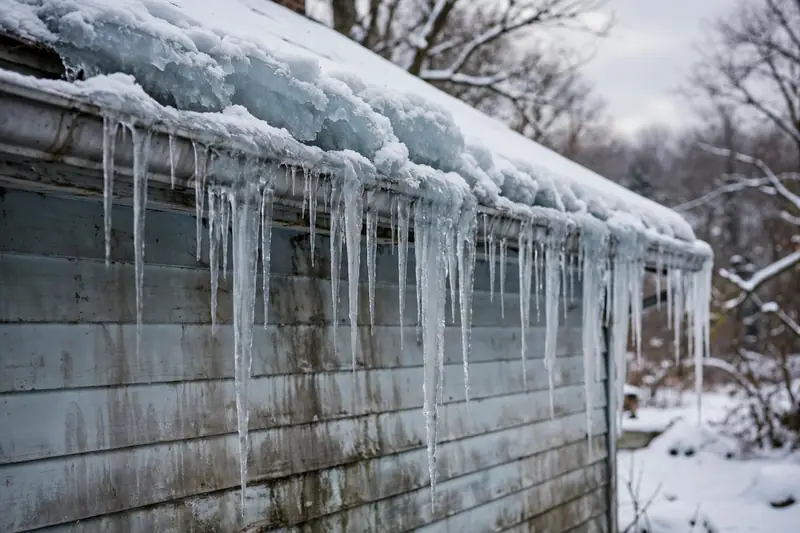
An ice dam forms when heat from your house melts the snow on the roof, and that meltwater refreezes at the cold eave. The ridge of ice then blocks the next round of meltwater, which backs up under the shingles and drips into your attic and ceiling. The fix starts inside the house, with heat loss, not on the roof edge.
How an ice dam actually forms
Three ingredients have to line up: snow on the roof, heat escaping from below, and cold air outside.
Warm air from the living space rises into the attic. Where the attic floor is thin on insulation or full of gaps, that warmth heats the roof deck. The snow lying on the upper part of the roof melts and runs down. At the eave, which hangs past the heated walls, the roof is as cold as the outdoors, so the water freezes again. Over days of this, the frozen edge grows into a thick ridge.
Once the ridge is there, new meltwater has nowhere to go. It pools behind the ice. Shingles are designed to shed water downhill, not to hold it back, so water seeps up under them, through the underlayment and into the roof deck.
Why Spokane roofs are set up for it
Spokane winters often swing above and below freezing within a few days. A sunny afternoon can melt the snow on a south-facing slope, and the next night drops it back into the teens. That freeze-thaw cycle drives the melt, refreeze and build-up pattern.
In years with heavy snow, a deep blanket also works as extra insulation, which keeps the heat from your attic from escaping through the snow and makes the melting uneven. Rain-on-snow events add to it by dumping water onto an existing snow load.
Houses differ in how likely they are to dam up:
- Older homes in neighborhoods like South Hill and Browne's Addition often have thin attic insulation, leaky ceiling plaster, and chimneys and plumbing stacks that carry heat upward.
- Homes with complicated rooflines, including dormers, valleys and additions, collect snow where roof planes meet.
- Homes on open, windswept ground, such as parts of Five Mile Prairie, can see snow drift against upper walls and pile unevenly on roof planes.
- Houses with covered or poorly ventilated attics trap warm, moist air that rises from kitchens and bathrooms.
Not sure how bad it is? A short call usually tells you.Have your ZIP code ready. A local restoration pro answers.
Call (509) 555-0134What causes the heat loss
Look for the leaks in the attic floor first. The common culprits are:
- Insulation that is thin, compressed, or missing around the edges.
- Gaps around recessed light fixtures, attic hatches and pull-down stairs.
- Bathroom and kitchen fans that vent into the attic rather than outside.
- Open gaps around chimneys, plumbing vent pipes and wire penetrations.
- Heating ducts running through the attic with leaks or little insulation.
- Soffit vents blocked by insulation, which stops cold air from flowing under the roof deck.
A well-ventilated attic stays close to the outdoor temperature, so the roof surface stays cold and snow does not melt unevenly. Ventilation and air sealing do the work together. Insulation alone, with open gaps, does very little.
Signs of a leak inside the house
Ice dam water usually enters near the exterior walls, so the first damage is often on the upper edge of a wall or along the ceiling at the perimeter.
- Water stains or brownish rings on the ceiling near an exterior wall.
- Paint that bubbles, peels or turns soft.
- Drips from a light fixture, a fan or a ceiling vent during a thaw.
- Wet or matted insulation when you look into the attic.
- Dark streaks on the inside of a wall near a window.
- Damp drywall at the top of an exterior wall, a musty smell, or small spots that return after painting.
If you see water, put a bucket under it, move belongings out of the way and photograph it. If a ceiling is bulging with trapped water, keep everyone out from under it, because a bulge can bring down a whole section of drywall.
Water still spreading? Talk to a local restoration pro now.Have your ZIP code ready. A local restoration pro answers.
Call (509) 555-0134Safe steps to take right now
- Stay off the roof and off the ladder. An icy surface, snow and a ladder on frozen ground are a risky mix. Do not chip, pound or hack at the ice.
- Rake the snow from the ground. A long-handled roof rake with wheels, used from the ground, can pull the first few feet of snow off the lower roof. Do not scrape down to the shingles, and be careful of falling snow and ice.
- Cool the attic if you can. Keep the attic hatch shut, pull back on bathroom steam, and let the attic stay cold. Do not run extra heat into the ceiling below.
- Open a channel only if it is safe. Roofers and some restoration companies use low-pressure steam to cut channels through ice, which is slower and gentler than chipping. This is not a job for a home hose.
- Protect the inside. Move furniture, roll up rugs, switch off any lights on a wet ceiling circuit, and keep people out from under bulging drywall.
- Document and call. Photograph stains, wet insulation and the roof edge from the ground, then call a roofer for the cause and a restoration crew for the water.
Need someone to look at it today?Tell them your ZIP and what happened. A local pro picks up.
Call (509) 555-0134Water damage in ceilings and walls
A roof leak behaves differently from a pipe leak. The water travels along rafters and the top plate, soaks into insulation and shows up a few feet from where it entered. By the time a stain appears, the attic insulation and the drywall backing may have been wet for days.
Three things then happen. Insulation gets heavy and loses its value as insulation, which makes the heat loss worse. Drywall softens and may sag. And the damp, dark space above a ceiling, with organic material and little air, is an easy place for mold. Our roof leak water damage page explains how the crew finds and dries the wet layers, and the mold remediation page covers what happens if growth has already started.
Drying a ceiling takes more than a fan. The crew uses a moisture meter and sometimes a thermal camera to trace where the water went, removes wet insulation and drywall that cannot be saved, and sets air movers and dehumidifiers. If you want to know what a finished ceiling job involves and what shapes the bill, the ceiling water damage repair cost guide breaks down the factors.
Preventing the next one
Fix the cause, not the ice.
- Air seal first. Close gaps around light fixtures, hatches, wiring and plumbing stacks.
- Add insulation to the attic floor until it is deep and even, including right out to the edges.
- Check ventilation. Soffit vents should be clear, with baffles that keep insulation from blocking the airflow, and ridge or gable vents should let air out.
- Vent fans outside. Bath and kitchen fans should discharge through the roof or wall, not into the attic.
- Insulate and seal ducts that run through unconditioned space.
- Clear gutters in fall so meltwater has somewhere to go.
- Ask a roofer about ice and water shield, a sticky waterproof membrane that goes under the shingles at the eaves during a re-roof. It does not stop dams, but it protects the roof deck if one forms.
Do the attic work in the fall, before the first deep snow, when it is easier to work and the weather helps.
Insurance and costs
Insurers often separate the roof repair, the interior water damage and the ongoing cost of insulation and ventilation upgrades. Each is handled differently, and upgrades are normally your own expense. What the interior cleanup costs depends on how much ceiling and wall is wet, whether insulation has to come out, how long the water sat, and whether mold is present. The inspecting company gives you a written figure before work starts.
Water still spreading? Talk to a local restoration pro now.Have your ZIP code ready. A local restoration pro answers.
Call (509) 555-0134Sources and official resources
Related
Services and areas for this guide
Homeowner guides
Keep reading

FAQ
Common questions
Straight answers to what Spokane homeowners ask most. Still unsure? Call and ask a local pro.
Call (509) 555-0134Are ice dams the same as icicles?
No. Icicles are frozen drips hanging from the edge. An ice dam is a ridge of solid ice along the eave that holds back meltwater behind it. Icicles can come with a dam, but a big set of icicles alone does not prove water is getting inside.
Can I use salt or a pick to break up the ice?
Skip both. Picks and shovels chip shingles and gutters, and rock salt can stain and corrode metal and kill plants below. Working on an icy roof edge from a ladder is also how people get hurt. A roofer with the right gear is the safer answer.
Will my insurance cover ceiling damage from an ice dam?
Many homeowners policies treat sudden water damage from an ice dam as covered, though some exclude it or limit it, and wear on the roof is usually treated differently. Read the policy and ask your agent before assuming either way.
How soon can mold start after an attic or ceiling leak?
Mold can begin growing within a day or two of materials staying wet, and insulation and the back of drywall stay damp for a long time. That is why an ice dam leak that you ignore until spring often turns into a mold problem.
Do newer homes get ice dams too?
Yes. Newer construction tends to be tighter, but recessed lights, bath fan ducts and attic hatches can still leak warm air. Complex rooflines with valleys and dormers also trap snow, so a newer house is not immune.
Water where it shouldn't be?
Call now and a licensed restoration pro near you can walk you through the next hour and set up a visit.